Description
Ornamental ivy - Hedera helix ‘Erecta’
In a nutshell
Hedera helix 'Erecta', a shrubby ivy
To find your way around the great diversity of ivy species, they can be classified in different ways.
One of the most traditional and scientific is the classification by species, based on botanical criteria. But it soon became apparent that the species Hedera helix is made up of hundreds, if not thousands, of cultivars, prompting the search for additional classification criteria.
Another commonly used classification system for ivy is the Pierot, named after Suzanne Warner Pierot, the first president and founder of the American Ivy Society. This system is based quite simply on the general appearance of the plant. It classifies them into 9 categories. It has the advantage of being very simple and suggestive. But it is rather approximate, because the same ivy can be classified in several categories.
Another classification is based on the stadium of development reached by ivy: juvenile, semi-adult, adult. But be aware that the same variety can go through each of these three stages in succession, of course.
Finally, a fourth system is based on the port. Ivy can be creeping, climbing, bushy or shrubby. But here too, the same variety can be both creeping and climbing, depending on the circumstances and the environment.
It is therefore usually necessary to use several of these classifications to characterise a particular ivy.
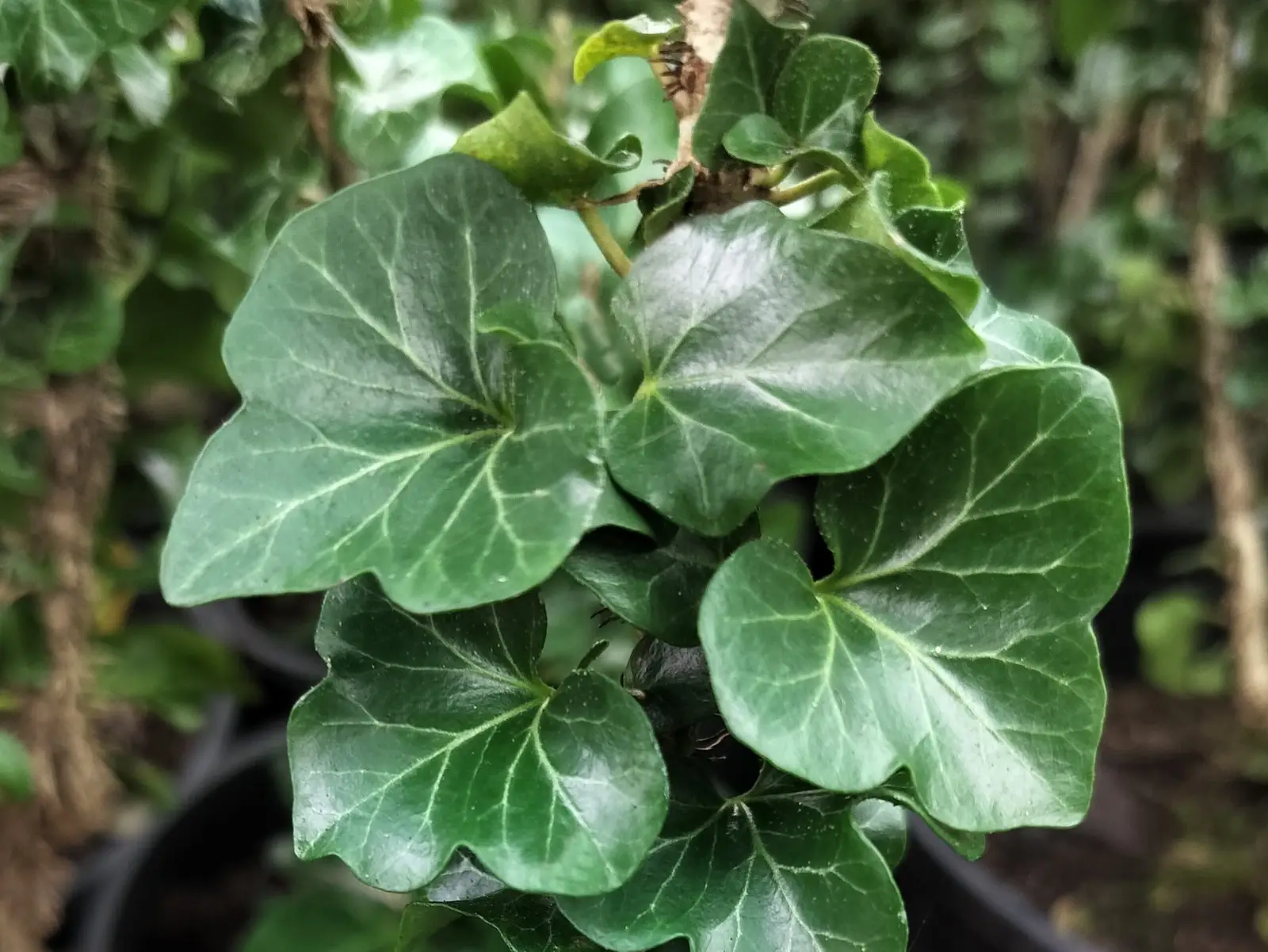
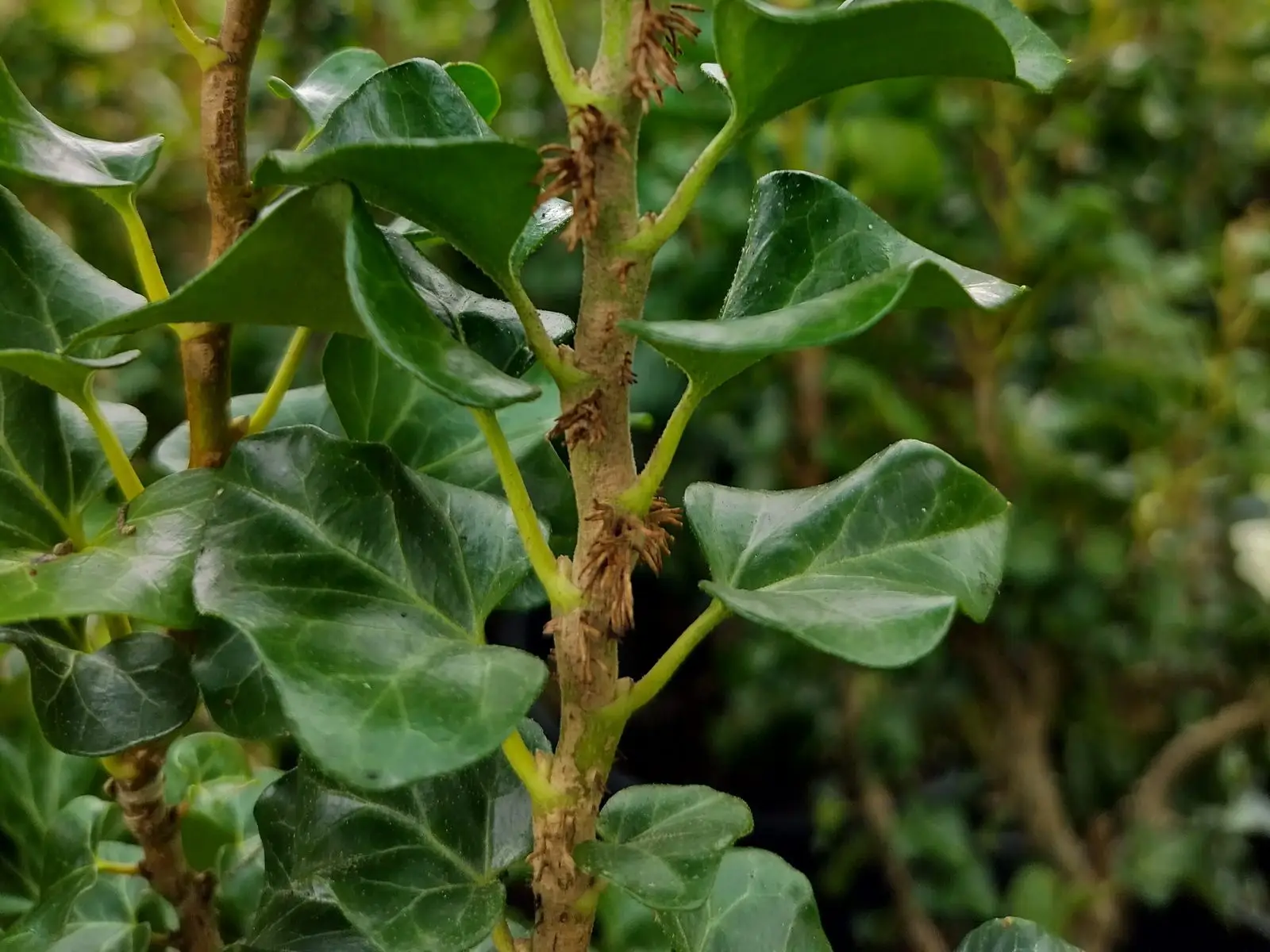
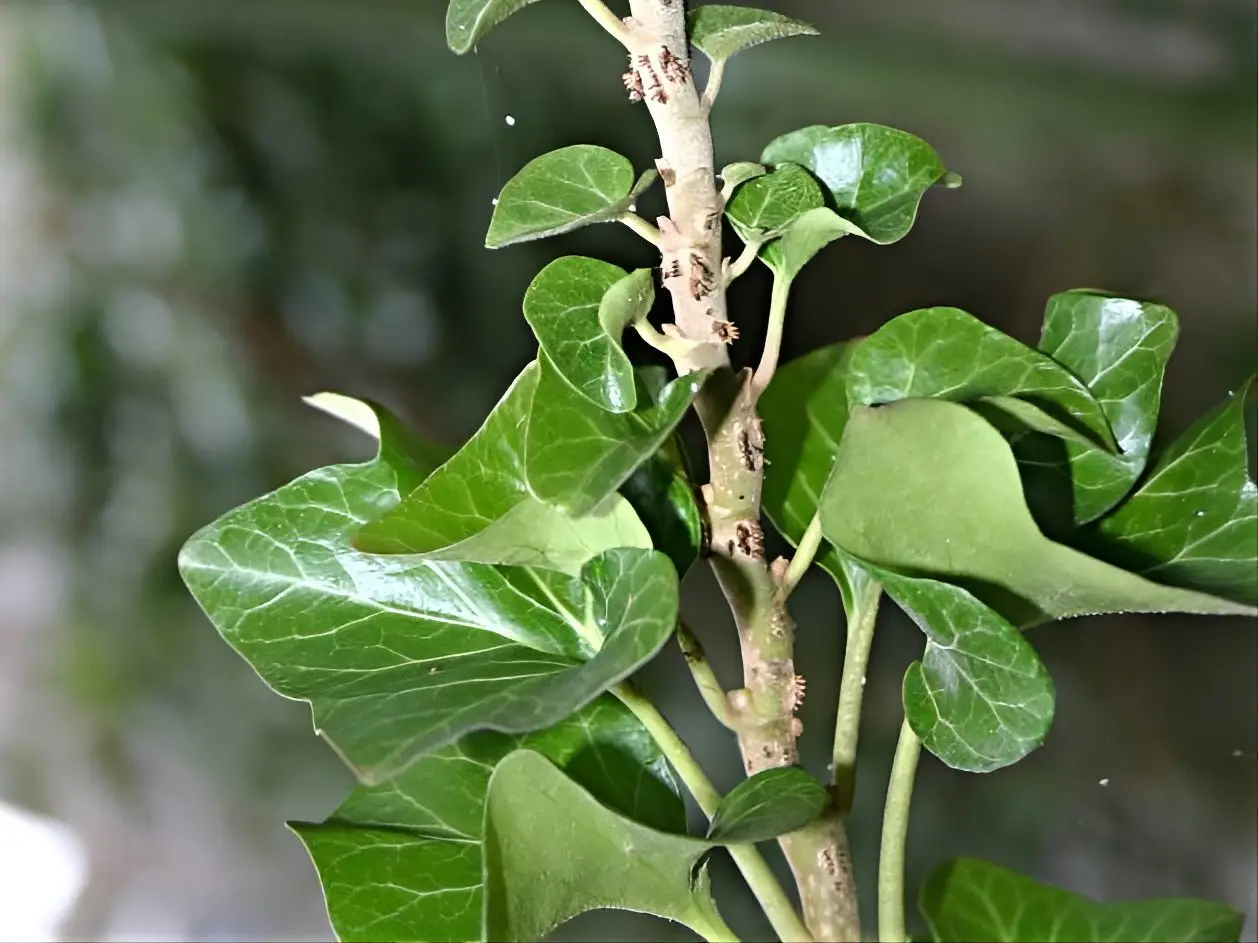
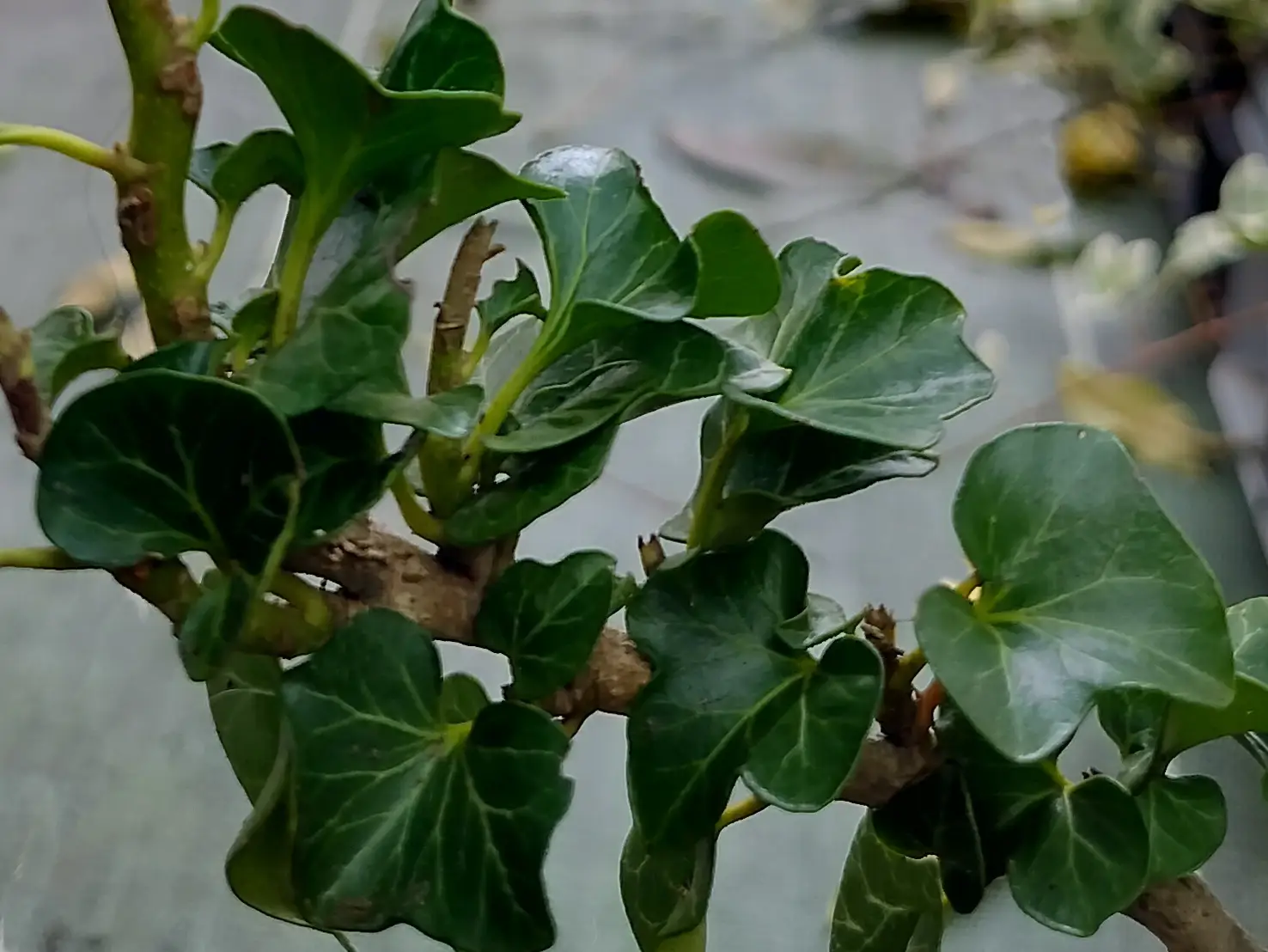
Ornamental ivy, Hedera helix ‘Erecta‘would thus be classified as a species of Hedera helix, in the «Curiosities» category of the Pierot classification; it is an ivy in the juvenile stage. Finally, as far as its habit is concerned, we would say that it is an ivy in the juvenile stage. shrub because its stems are upright, rather like those of a shrub. In fact, they are rather woody like those of shrubs. It can reach almost 1 metre in height, without any support or spikes.
History
This cultivar was first listed by Anon in 1898.
Detailed description of Hedera helix 'Erecta'
Botanical information
- Family: Araliaceae
- Genre : Hedera
- Species : helix
- Cultivar: ‘Erecta’
- Pierot classification: ivy curiosity
- Foliage stage: juvenile
- Origin of the species: Europe, from Spain to Norway, but little on the Atlantic coast.
- Origin of cultivar: unknown
Description of Hedera helix ‘Erecta’
- Growth habit: shrubby
- Number of lobes: usually unlobed, sometimes 3 lobes
- Leaf length: 5 cm
- Sheet width: 5 cm
- Colour of leaf: dark green
- Colour of veins: light green
- Colour of stem and petiole: brown
- Branches: few branches
- Hairs: stellate, 3 to 5 branches
Planting, cultivation and maintenance advice for Hedera helix ‘Erecta’
- Exposure: shade, part shade, sun
- Hardiness: -20°C
- Soil moisture: cool soil
- Soil PH: neutral or chalky
- Soil type: all
- Soil richness: ordinary or humus-bearing
- Use: ground cover, pots, window boxes, rockery, bonsai, topiary, freestanding
- Development: moderate
- Pruning: once a year
- Pests: very rare (spider mites, mealy bugs)
- Diseases: very rare (leaf spots)
A page from my little ivy encyclopaedia
Other shrubby ivy
There are other shrubby ivies. The most similar to Hedera helix ‘Erecta’ is unquestionably Hedera helix ‘Congesta’. They are often confused.
In the same style, we also find Hedera helix ‘Conglomerata’ which was voted Ivy of the Year by the American Ivy Society in 2015.
We should also mention the «tree’ ivy:
- H. rhombea ‘Submaginata arborescens’ (Submaginata arborescens)’
- H. helix ‘Irish Lace arborescens
- H. helix ‘Pepermint arborescens’ (Pepermint tree)’
- H. helix ‘Deltoidea arborescens’ (Deltoidea arborescens)’
- H. helix ‘Arborescens’
You can find all the ivy shrubs on this page.
This type of ivy is generally suitable for rock gardens. They are modest in size and upright, so they add volume to a rock garden and create verticals that break up the monotony.
Ivy in literature
“Ivy covered the dilapidated walls, transforming the desolation into a scene of beauty.”


Reviews
There are no reviews yet.