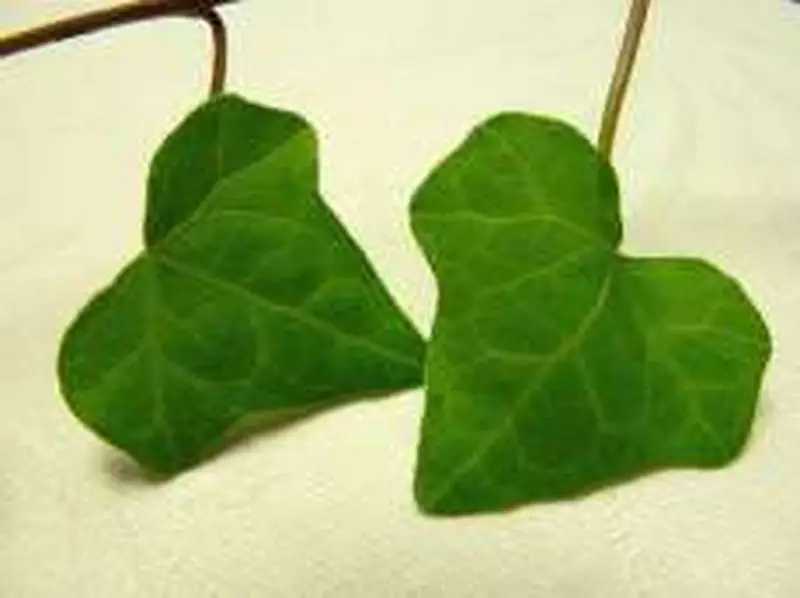
Small ivy with dark green, paper-thin leaves. In winter, in cold conditions, they are often tinted brown.

They are fairly widely spaced and attached by long petioles to rather stiff stems.

More compact than the typical species.

6.90 

Clear
Category

Description

Japanese ivy - Hedera rhombea ‘Pierot’

In a nutshell

Japanese ivy, Hedera rhombea ‘Pierot’, is a small ivy with dark green, paper-thin leaves. In winter, in cold conditions, they are often tinted brown.

They are fairly widely spaced and attached by long petioles to rather stiff stems.

Mrs Pierot was the founder and president of the American Ivy Association.

History

Japanese ivy, Hedera rhombea ‘Pierot’, was discovered on the island of Jeju-do, in South Korea, in 1975. 

Technical details - Japanese Ivy 'Pierot'

Botanical information

  • Family: Araliaceae
  • Genre : Hedera
  • Species : rhombea
  • Cultivar: ‘Pierot’
  • Pierot classification: miniature ivy, type ivy
  • Foliage stage: juvenile
  • Origin of the species: East Asia
  • Origin of cultivar: found on the island of Jeju-do in South Korea in 1975


Description of Hedera rhombea ‘Pierot’

  • Harbour: scattered
  • Number of lobes: 3 lobes in general
  • Leaf length: 2 cm
  • Sheet width: 4 cm
  • Colour of leaf: medium green
  • Colour of veins: light green
  • Colour of stem and petiole: brown to green
  • Hairs: scaly, 10 to 18 rounded branches


Planting, growing and care instructions for Hedera rhombea ‘Pierot’

  • Exposure: shade, part shade
  • Hardiness: -12°C
  • Soil moisture: cool soil
  • Soil PH: all
  • Soil type: all
  • Soil richness: ordinary or humus-bearing
  • Use: ground cover, climber
  • Development: moderate
  • Pruning: once a year
  • Pests: very rare (spider mites, mealy bugs)
  • Diseases: very rare (leaf spots)

A page from my little ivy encyclopaedia

All your questions about ivy

Is ivy good for biodiversity?

Ivy is very useful for biodiversity. But it can also have a negative impact under certain conditions.

Ivy is highly competitive. It can cover large areas, to the detriment of other local native plants and the animals that depend on them. It must therefore be controlled and used wisely.

In addition, ivy has many positive impacts on biodiversity:

  • It provides habitat and shelter. Its evergreen foliage provides excellent protection against the weather and predators. Many insects, birds and mammals like to make their homes here. In winter, its thick foliage provides a welcome winter refuge.
  • It provides food. Ivy flowers appear late in the season (often in autumn), providing an important source of nectar for bees and other pollinating insects at a time when few plants are flowering. Ivy berries, which ripen in winter, are also a source of food for many birds.
On the whole, provided it is properly managed under certain specific conditions, ivy is highly beneficial to biodiversity and more than ever useful for preserving species.
La boutique du lierre - guirlande de lierre

Ivy in literature

“Ivy had invaded the façade, bringing the house to life in its solitude.

Charles Dickens, David Copperfield

Additional information

Weight N/A
Stock of 1-litre cups and pots

1 to 2 pots

Stock 2 or 4 litre containers

0 container

Large stock items

0 big topic

General appearance

Scattered, Spread out

Type of foliage and colour

Green

Possible uses

Ground cover, Climber

Exhibition

Part shade, Shade

Hardiness

Fairly hardy

Easy to grow

Easy

Speed

Average

Vigorous development

Medium

Classification according to the Pierot system

Ivy type, Miniature

Reward obtained

No known reward

Reviews

There are no reviews yet.

Only logged in customers who have purchased this product may leave a review.

Find out more ...

Other interesting ivy plants for you