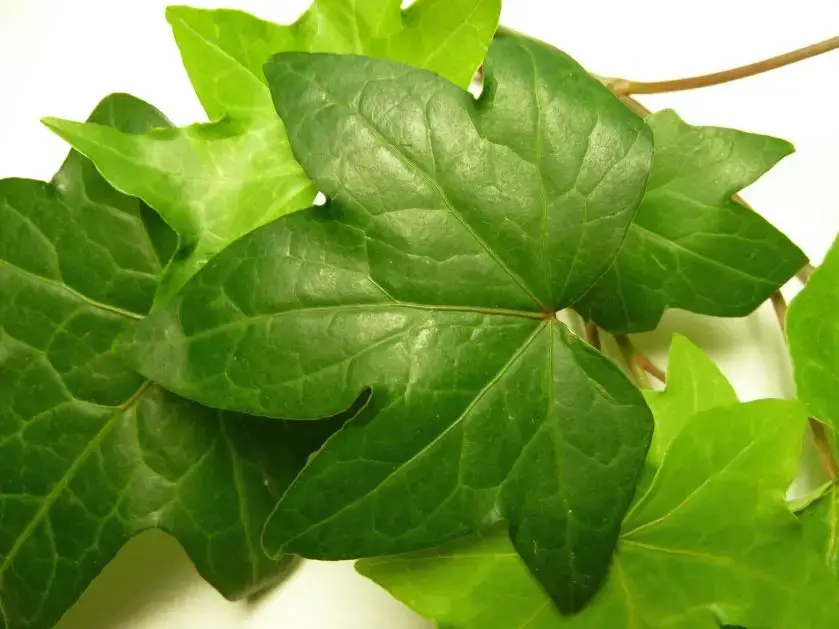
Hedera hibernica ‘Ebony’ - Irish Ivy

Description

All about the health of my ivy
Bacterial spot disease
Ivy is virtually disease-free, especially when grown outdoors on vertical supports. Indoors, or as ground cover in damp conditions, diseases such as bacterial spot can sometimes occur.
Causes :
As the name suggests, this disease is caused by a bacterium (Xanthomonas hederae). It occasionally appears on ivy grown in glasshouses, in humid growing conditions and at high temperatures.
Symptoms :
Symptoms appear as light green, translucent spots on the leaves and petioles, followed by brownish spots with reddish margins. Cankered areas develop on the stem.
Treatment :
As a preventive measure, avoid wetting the leaves. In the event of light infestation, remove the affected parts and burn them. If the disease is too widespread, remove diseased plants to avoid contamination and destroy them by burning.

Bacterial spot disease (Source: https://horticulture.ahdb.org.uk)

Additional information
| Weight | N/A |
|---|---|
| Stock of 1-litre cups and pots | 6 to 10 pots |
| Stock 2 or 4 litre containers | 21 to 50 containers |
| Large stock items | 0 big topic |
| General appearance | Fairly branched, Compact, Spread out |
| Type of foliage and colour | Red in winter, Green |
| Possible uses | Ground cover, Climber, Houseplant, Pots or planters, Hanging plants |
| Exhibition | Part shade, Shade |
| Hardiness | Good hardiness |
| Easy to grow | Easy |
| Speed | Fast |
| Vigorous development | Vigorous |
| Classification according to the Pierot system | Bird's paw |
| Reward obtained | No known reward |
Only logged in customers who have purchased this product may leave a review.
Related products
-
Hedera helix ‘Bill Archer’ - Ornamental ivy
- From 5.90 €
- Select options This product has multiple variants. The options may be chosen on the product page
-
Hedera helix ‘Baltica’ - Ornamental ivy
- From 5.90 €
- Select options This product has multiple variants. The options may be chosen on the product page
-
Hedera helix ‘Baccifer’ - Ornamental ivy
- From 5.90 €
- Select options This product has multiple variants. The options may be chosen on the product page
-
Hedera helix ‘Alt Heidelberg’ - Ornamental ivy
- From 5.90 €
- Select options This product has multiple variants. The options may be chosen on the product page


 Français
  English (UK)
  Deutsch
  Nederlands
  Italiano
Reviews
There are no reviews yet.