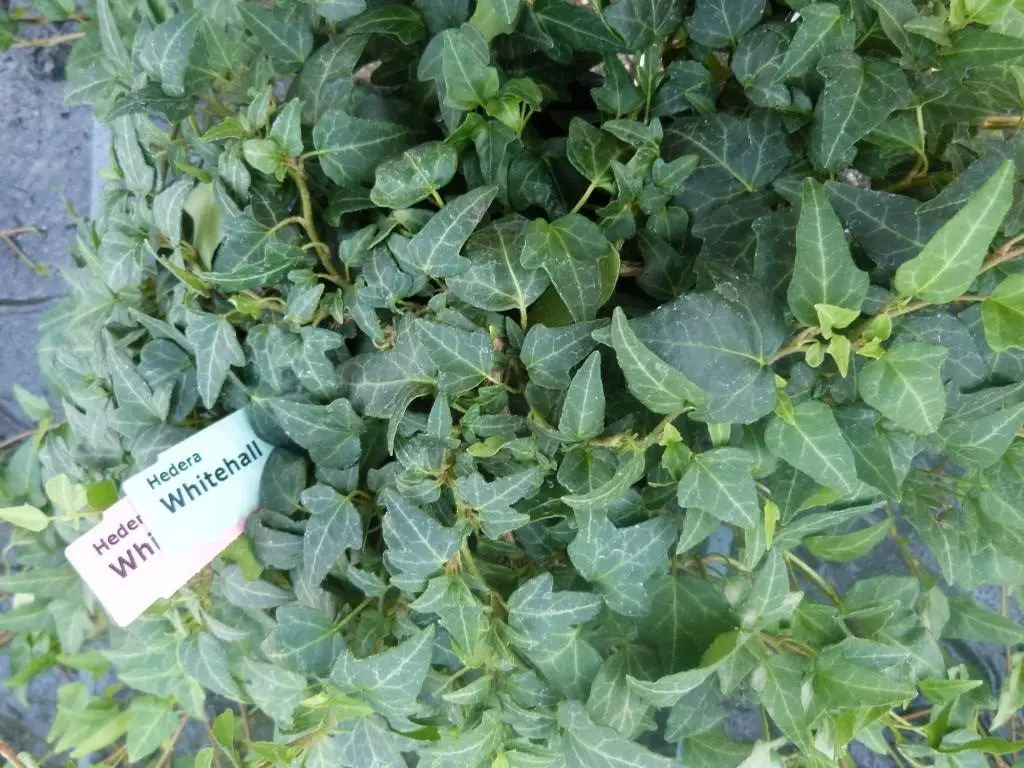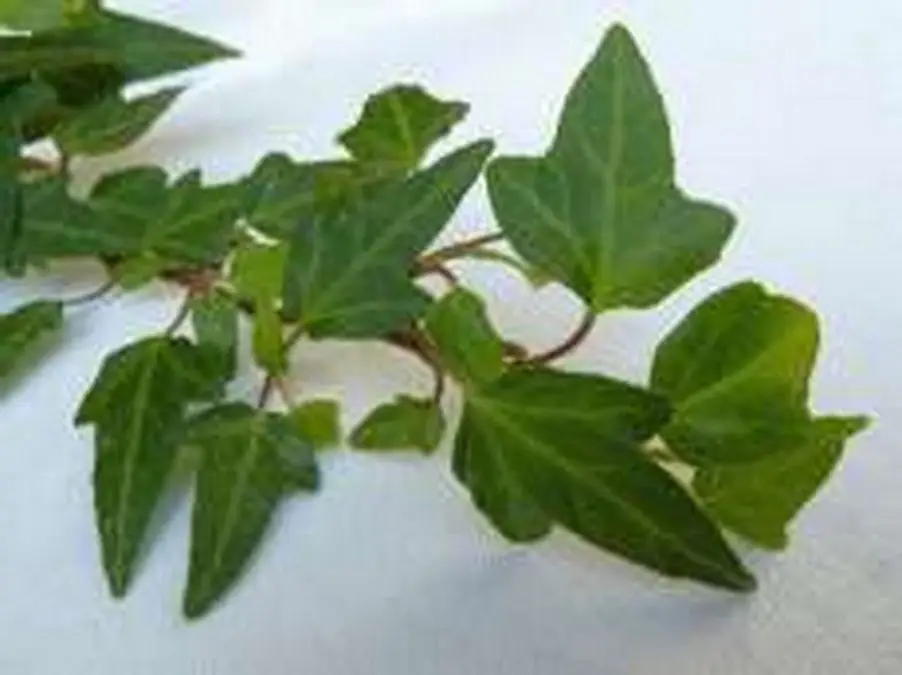
Stocky plant. Numerous stems bearing polymorphous medium-green leaves, sometimes without lobes, sometimes with 3 lobes.

The small basal lobes are often uneven.

Forms fairly thick carpets. Slow growth.

From 5.90 

Clear
Category

Description

Ornamental ivy - Hedera helix ‘Whitehall’

In a nutshell

Ornamental ivy, Hedera helix ‘Whitehall’, is a stocky plant. 

The numerous stems bear polymorphous medium-green leaves, sometimes without lobes, sometimes with 3 lobes. The small basal lobes are often uneven.

The plant forms fairly thick mats. It grows slowly.

History

This cultivar was discovered in Whitehouse Ivies, UK, in the 1980s. It closely resembles ‘Kobold’ and ‘Wichtel’.

Technical details - Hedera helix 'Whitehall'

Botanical information

  • Family: Araliaceae
  • Genre : Hedera
  • Species : helix
  • Cultivar: ‘Whitehall’
  • Pierot classification: miniature ivy, bird's-foot ivy
  • Foliage stage: juvenile
  • Origin of the species: Europe, from Spain to Norway, but little on the Atlantic coast.
  • Origin of cultivar: believed to have been discovered in Whitehouse Ivies, United Kingdom, in the 1980s


Description of Hedera helix ‘Whitehall’

  • Port : stocky
  • Number of lobes: 0 to 3 lobes in general
  • Leaf length: 2 to 5 cm
  • Leaf width: 1 to 3 cm
  • Colour of leaf: medium green
  • Leaf shape: polymorphic
  • Colour of veins: light green
  • Stem: very branched
  • Internodes: 1 cm
  • Mattress: fairly thick
  • Colour of stem and petiole: greenish purple
  • Length of petiole: 1 cm
  • Hairs: stellate, 3 to 5 branches


Planting, cultivation and care advice for Hedera helix ‘Whitehall’

  • Exposure: shade, part shade, sun
  • Hardiness: -15°C
  • Soil moisture: cool soil
  • Soil PH: neutral or chalky
  • Soil type: all
  • Soil richness: ordinary or humus-bearing
  • Use: ground cover, pots, window boxes
  • Development: slow
  • Pruning: once a year
  • Pests: very rare (spider mites, mealy bugs)
  • Diseases: very rare (leaf spots)

A page from my little ivy encyclopaedia

All your questions about ivy

Ivy manure - Recipe, uses?

Ivy manure is an excellent natural insecticide and insect repellent. It keeps aphids, whiteflies and mites at bay and eliminates them if necessary.

To prepare your ivy purin, you need 1 kilo of leaves per 10 litres of water. Preferably use rainwater. Chop the leaves before adding them to the water. Place your mixture in the shade and stir regularly (every day or two). When the mixture stops bubbling, your liquid manure is ready and fermentation is complete. Filter the mixture and keep it out of the light and in a cool place.

When you want to use it, dilute it to 5 % and add a teaspoon of black soap. Spray the ivy manure on and under the leaves every fortnight as a preventive measure, and every five days as a curative measure.

La boutique du lierre - guirlande de lierre

Ivy in literature

“The ivy snaked around the garden gate, as if to protect the lovers' secrets.

Miguel de Unamuno, Niebla

Additional information

Weight N/A
Stock of 1-litre cups and pots

21 to 50 pots

Stock 2 or 4 litre containers

11 to 20 containers

Large stock items

1 to 2 large subjects

General appearance

Thick, Stocky, Very branched

Type of foliage and colour

Green

Possible uses

Ground cover, Pots or planters

Exhibition

Part shade, Shade, Sun

Hardiness

Good hardiness

Easy to grow

Easy

Speed

Slow

Vigorous development

Medium

Classification according to the Pierot system

From 'Pittsburgh', Miniature, Bird's foot

Reward obtained

No known reward

Reviews

There are no reviews yet.

Only logged in customers who have purchased this product may leave a review.

Find out more ...

Other interesting ivy plants for you