A stocky, slow-growing variety.

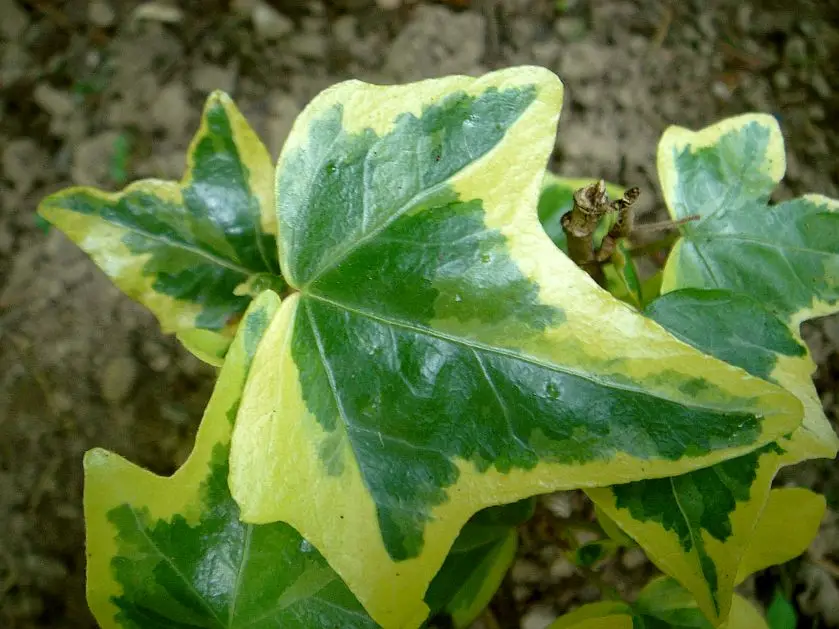
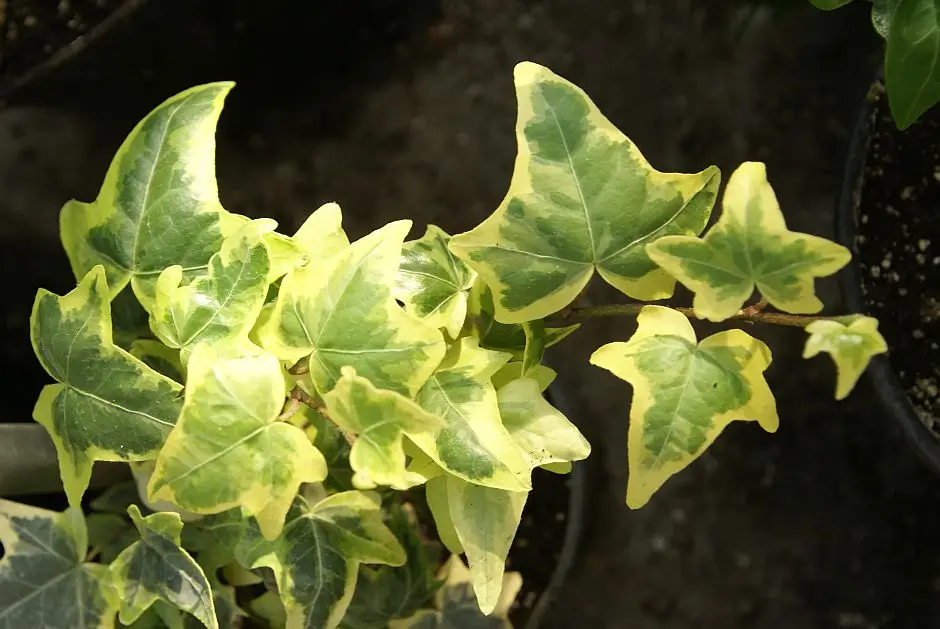
Slightly branched plant, spaced internodes, green leaves with a yellow margin form small mats that are not too thick.

Good ground cover for small areas, also interesting in pots.

From 7.90 

Clear
Category

Description

Ornamental ivy - Hedera helix ‘Ria’

In a nutshell

Ornamental ivy, Hedera helix ‘Ria’, is a stocky, slow-growing variety. 

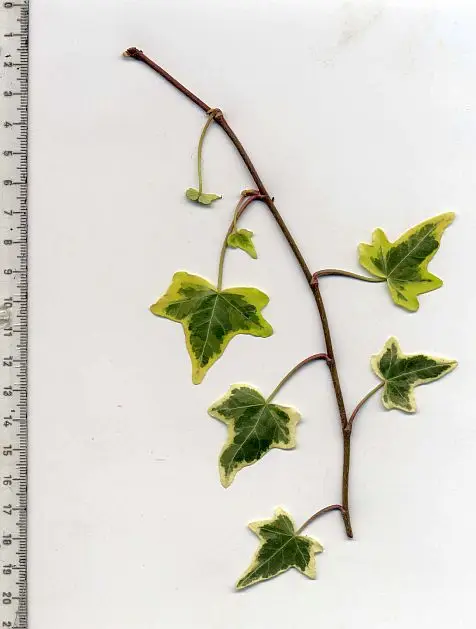
The plant has few branches, and the stems with spaced internodes bear very colourful 3-lobed leaves. The 2 x 3 cm leaves are green with a yellow margin and form small but not too thick mats. The edges of the leaf blades, which vary in width, turn golden yellow in summer and remain coloured on mature leaves.

A good ground cover for small areas, it is also interesting in pots.

History

This cultivar is a mutation of ‘Ira’, selected by the Fibrex nursery in the United Kingdom in 2000.

Technical details - Hedera helix 'Ria'

Botanical information

  • Family: Araliaceae
  • Genre : Hedera
  • Species : helix
  • Cultivar: ‘Ria’
  • Pierot classification: standard ivy, variegated ivy
  • Foliage stage: juvenile
  • Origin of the species: Europe, from Spain to Norway, but little on the Atlantic coast.
  • Origin of cultivar: selected by Fibrex Nursery in Great Britain, sport of ‘Ira’.’


Description of Hedera helix ‘Ria’

  • Growth habit: spreading, stocky
  • Number of lobes: 3 to 5 lobes in general
  • Leaf length: 3.5 cm
  • Sheet width: 4 cm
  • Leaf colour: dark green and light green, glossy, with golden-yellow margins
  • Leaf shape: central lobe longer than the lateral ones
  • Base: slightly cordate
  • Stems: lightly branched
  • Internodes: spaced out
  • Colour of veins: light green
  • Colour of stem and petiole: purple
  • Hairs: stellate, 3 to 5 branches


Planting, cultivation and maintenance advice for Hedera helix ‘Ria’

  • Exposure: sun, shade, part shade
  • Hardiness: -15°C
  • Growing : easy
  • Soil moisture: cool soil
  • Soil PH: neutral or chalky
  • Soil type: all
  • Soil richness: ordinary or humus-bearing
  • Use: ground cover, climber, hanging baskets, pots, window boxes, houseplant
  • Development: slow
  • Pruning: once a year
  • Pests: very rare (spider mites, mealy bugs)
  • Diseases: very rare (leaf spots)

A page from my little ivy encyclopaedia

The occasional question ...

What is an internode?

Ivy leaves are arranged alternately on the stem, once on one side and once on the other, and so on. The place where the leaf attaches to the stem is called the node. The space between two consecutive nodes is called the’knot.

The distance between the nodes varies greatly depending on the species and cultivar. The distance between nodes is therefore often a distinctive characteristic of varieties.

Ivy with short internodes is compact and well covered with leaves. They often form thick mats. In contrast, ivy with long internodes has sparser leaves on much longer stems. This type of ivy forms a less dense cover, which can be an advantage or a disadvantage depending on the purpose and the use to which it is to be put.

La boutique du lierre - guirlande de lierre

Ivy in literature

“O ivy, gentle companion of gloomy days, embrace my dark thoughts.»

Charles Baudelaire, The Flowers of Evil

Additional information

Weight N/A
Stock of 1-litre cups and pots

6 to 10 pots

Stock 2 or 4 litre containers

3 to 5 containers

Large stock items

0 big topic

General appearance

Spread out, Extended, Little branched, Tufted, Bushy

Type of foliage and colour

Yellow variegation

Possible uses

Ground cover, Climber, Houseplant, Pots or planters, Hanging plants

Exhibition

Part shade, Shade, Sun

Hardiness

Good hardiness

Easy to grow

Easy

Speed

Slow

Vigorous development

Medium

Classification according to the Pierot system

Ivy type, variegated

Reward obtained

No known reward

Reviews

There are no reviews yet.

Only logged in customers who have purchased this product may leave a review.

Find out more ...

Other interesting ivy plants for you