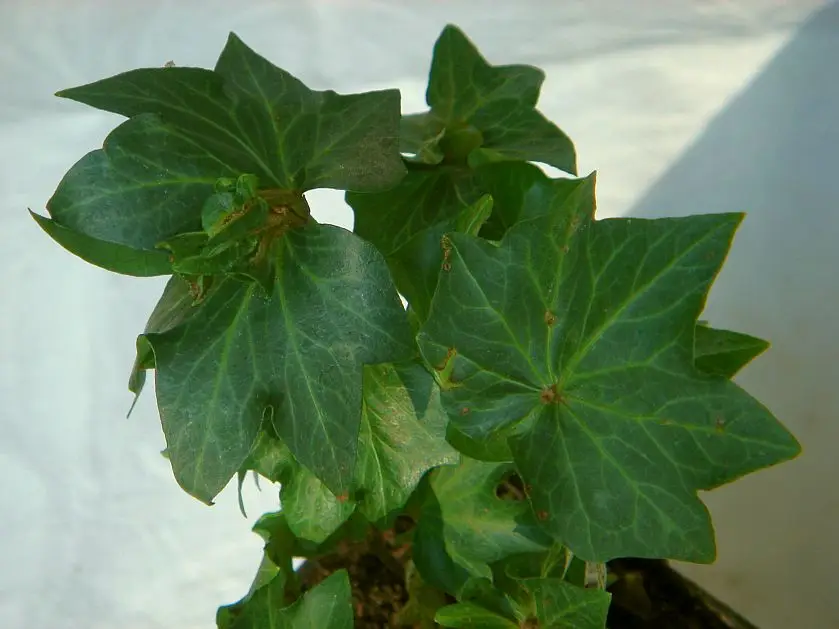
Compact ivy with wavy, fan-shaped, shiny dark green leaves.

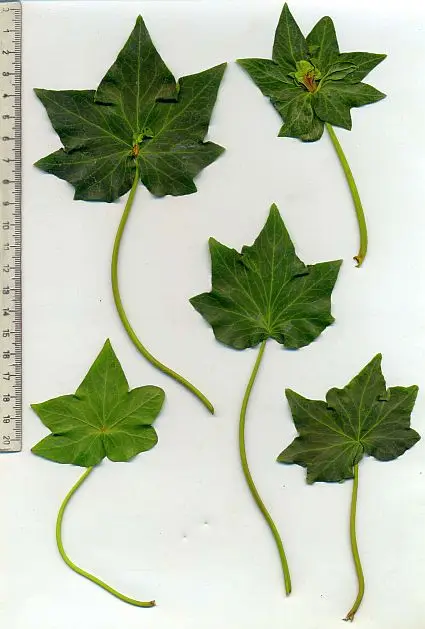
Leafy outgrowths sometimes along the main veins. Blade made up of 7 pointed lobes with scurved edges. Stems thick, fasciate at the top and branched.

Suitable for all exposures, from shade to sun. For ground cover, pots or window boxes.

From 5.90 

Clear
Category

Description

Ornamental ivy - Hedera helix ‘Astin’

In a nutshell

Ornamental ivy, Hedera helix ‘Astin’, looks like ‘Dicke von Stauss’The leaves are wavy, fan-shaped, dark green and shiny.

Leafy growths sometimes appear along the main veins. The leaf blade has 7 pointed lobes with scurved edges.

This compact ivy forms a clump of thick stems, fasciated at the top and branched. It adapts to all types of exposure, from shade to sun.

History

This variety of ivy is a fasciate version of ‘California’.

Technical details - Hedera helix 'Astin'

Botanical information

  • Family: Araliaceae
  • Genre : Hedera
  • Species : helix
  • Cultivar: ‘Astin’
  • Pierot classification: ivy with wavy-crisped leaves
  • Foliage stage: juvenile
  • Origin of the species: Europe, from Spain to Norway, but little on the Atlantic coast.
  • Origin of cultivar: ‘California’ sport’


Description of Hedera helix ‘Astin’

  • Growth habit: compact, tufted
  • Number of lobes: 7 lobes in general
  • Leaf length: 8 cm
  • Sheet width: 8 cm
  • Colour of leaf: dark green
  • Colour of veins: light green
  • Colour of stem and petiole: pink
  • Hairs: stellate, 3 to 5 branches


Planting, cultivation and maintenance advice for Hedera helix ‘Astin’

  • Exposure: shade, part shade, sun
  • Hardiness: -15°C
  • Soil moisture: cool soil
  • Soil PH: neutral or chalky
  • Soil type: all
  • Soil richness: ordinary or humus-bearing
  • Use: ground cover, pots, window boxes, houseplant
  • Development: moderate
  • Pruning: once a year
  • Pests: very rare (spider mites, mealy bugs)
  • Diseases: very rare (leaf spots)

A page from my little ivy encyclopaedia

The question of circumstance

What is a fasciation?

Fasciation is a natural phenomenon resulting from a growth anomaly in a plant. This anomaly causes growth in bundles (hence the name fasciation). It can affect stems, flowers or fruit. In the case of ivy, fasciation generally involves the stems. 

This phenomenon is in no way detrimental to the plant. On the contrary, some fasciations significantly embellish the plant in question and make it all the more valuable, as this natural anomaly is quite rare. It is all the more difficult to cause, given that botanists are currently unable to clearly explain the cause(s).

So don't miss out on these natural curiosities!

La boutique du lierre - guirlande de lierre

Ivy in literature

“The ivy of flattery often chokes the trunk of truth.

Shakespeare, Julius Caesar

Additional information

Weight N/A
Stock of 1-litre cups and pots

11 to 20 pots

Stock 2 or 4 litre containers

11 to 20 containers

Large stock items

0 big topic

General appearance

Tufted, Stocky

Type of foliage and colour

Green

Possible uses

Ground cover, Houseplant, Pots or planters

Exhibition

Part shade, Shade, Sun

Hardiness

Good hardiness

Easy to grow

Easy

Speed

Average

Vigorous development

Medium

Classification according to the Pierot system

Sired by 'Pittsburgh', Wavy, curly or crisp

Reward obtained

No known reward

Reviews

There are no reviews yet.

Only logged in customers who have purchased this product may leave a review.

Find out more ...

Other interesting ivy plants for you