One of the hardiest ivies because of its geographical origin.

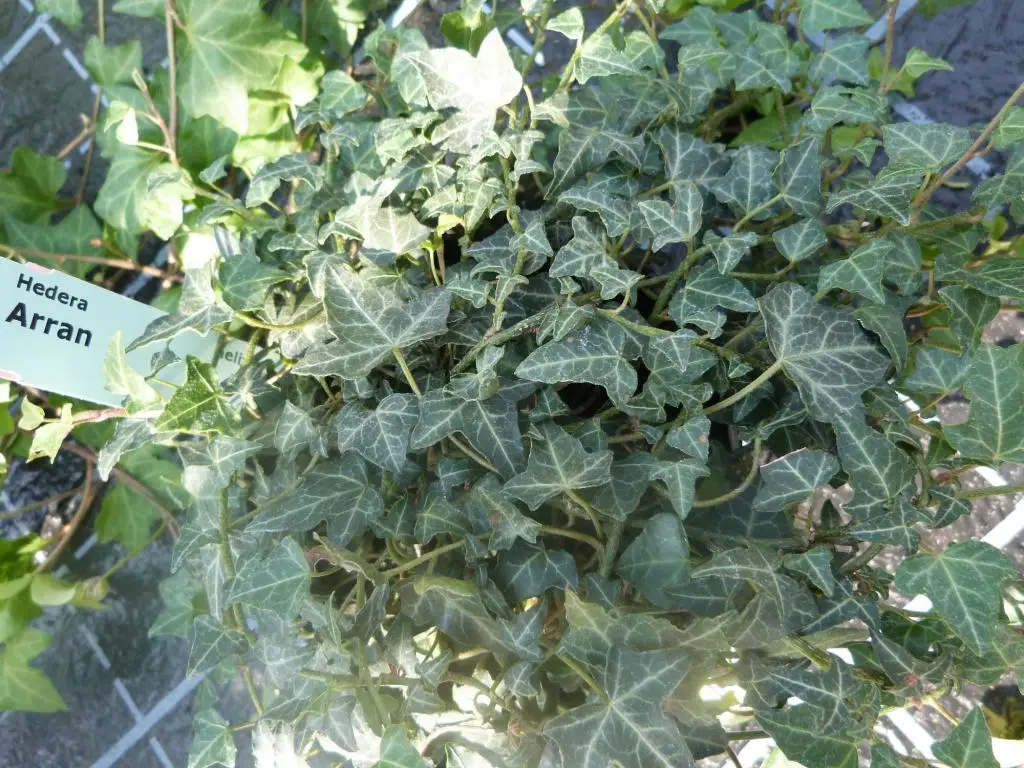
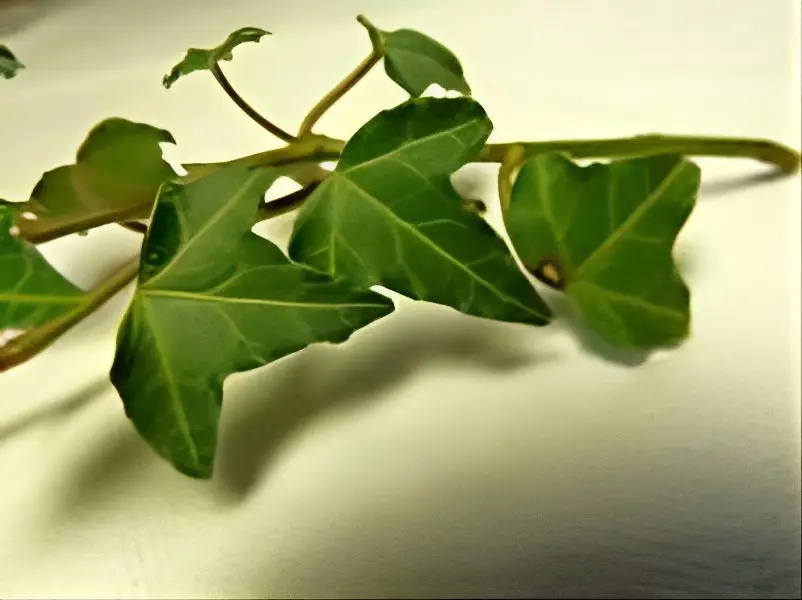
Rather small, three-lobed leaves with a more widely developed terminal lobe. Blade medium green, turning dark green. May turn dark brown in cold conditions.

A very hardy miniature ivy that prefers not too shady situations.

From 5.90 

Clear
Category

Description

Ornamental ivy - Hedera helix ‘Arran’

In a nutshell

Ornamental ivy, Hedera helix ‘Arran’, This is one of the hardiest ivies because of its geographical origin.

The rather small leaves are three-lobed with a more widely developed terminal lobe. The leaf blade is medium green, turning dark green. They can turn dark brown in cold conditions. These colours contrast beautifully with the grey to light green veins.

This is a very hardy miniature ivy that prefers not too shady situations.

History

This cultivar was discovered by Alison Rutherford on the Isle of Arran, off the coast of Scotland, in the 1980s.

Detailed sheet - Hedera helix 'Arran'

Botanical information

  • Family: Araliaceae
  • Genre : Hedera
  • Species : helix
  • Cultivar: ‘Arran’
  • Pierot classification: miniature ivy
  • Foliage stage: juvenile
  • Origin of the species: Europe, from Spain to Norway, but little on the Atlantic coast.
  • Origin of cultivar: discovered in the 1960s by Alison Rutherford in the wild on the Isle of Arran, off the coast of Scotland.


Description of Hedera helix ‘Arran’

  • Growth habit: spreading
  • Number of lobes: 3 lobes in general
  • Leaf length: 3 cm
  • Sheet width: 3 cm
  • Leaf colour: medium to dark green
  • Leaf colour variation: turns dark brown in cold conditions
  • Colour of veins: grey to light green
  • Colour of stem and petiole: greenish purple
  • Branches: few branches
  • Hairs: stellate, 3 to 5 branches


Planting, cultivation and maintenance advice for Hedera helix ‘Arran’

  • Exposure: sun, part shade
  • Hardiness: -15°C
  • Soil moisture: cool soil
  • Soil PH: neutral or chalky
  • Soil type: all
  • Soil richness: ordinary or humus-bearing
  • Use: ground cover, climber, pot, window box, rockery
  • Development: medium
  • Pruning: once a year
  • Pests: very rare (spider mites, mealy bugs)
  • Diseases: very rare (leaf spots)

A page from my little ivy encyclopaedia

The question of circumstance

What is a leaf blade?

Botanically Speaking of which, a leaf is made up of two parts: the petiole and the blade. The petiole is the narrow part that connects the leaf to the stem. The limb is the broad, spreading, usually flat part of the leaf. It is criss-crossed by veins. It is made up of numerous chlorophyll cells which carry out photosynthesis. This is where the sugars and proteins that make up the sap are produced using light.

There is a very rich vocabulary for describing the leaf, and more particularly the shape of the leaf blade. You can find all this vocabulary here on our website

La boutique du lierre - guirlande de lierre

Ivy in literature

“Ivy covered the decrepit walls, mocking the ravages of time and man.

Herman Melville, Pierre or Ambiguities

Additional information

Weight N/A
Stock of 1-litre cups and pots

11 to 20 pots

Stock 2 or 4 litre containers

6 to 10 containers

Large stock items

0 big topic

General appearance

Spread out, Little branched

Type of foliage and colour

Green

Possible uses

Ground cover, Climber, Pots or planters, Rockwork

Exhibition

Part shade, Sun

Hardiness

Good hardiness

Easy to grow

Easy

Speed

Average

Vigorous development

Medium

Classification according to the Pierot system

Miniature

Reward obtained

No known reward

Reviews

There are no reviews yet.

Only logged in customers who have purchased this product may leave a review.

Find out more ...

Other interesting ivy plants for you