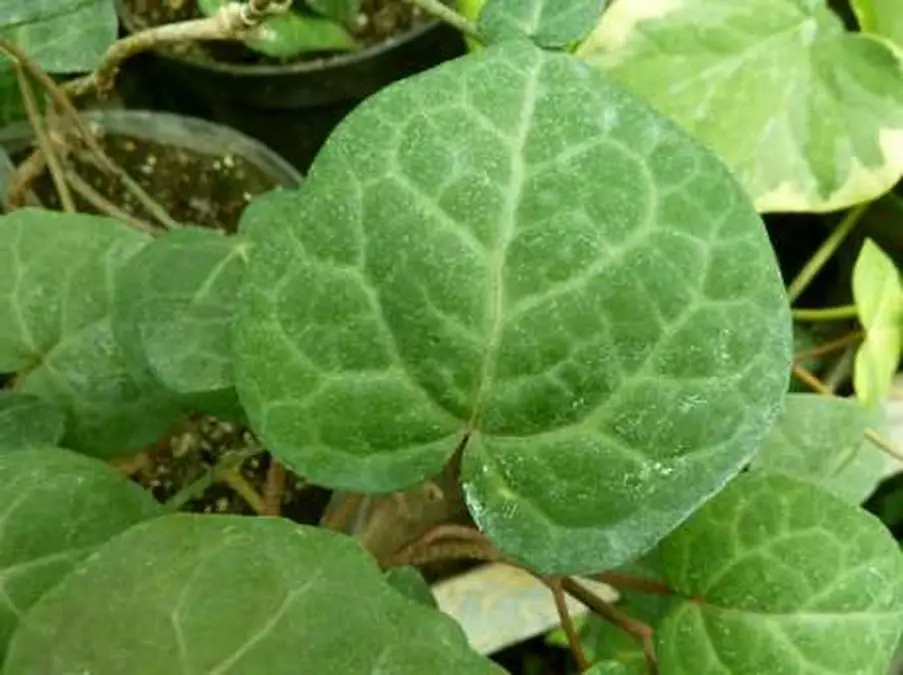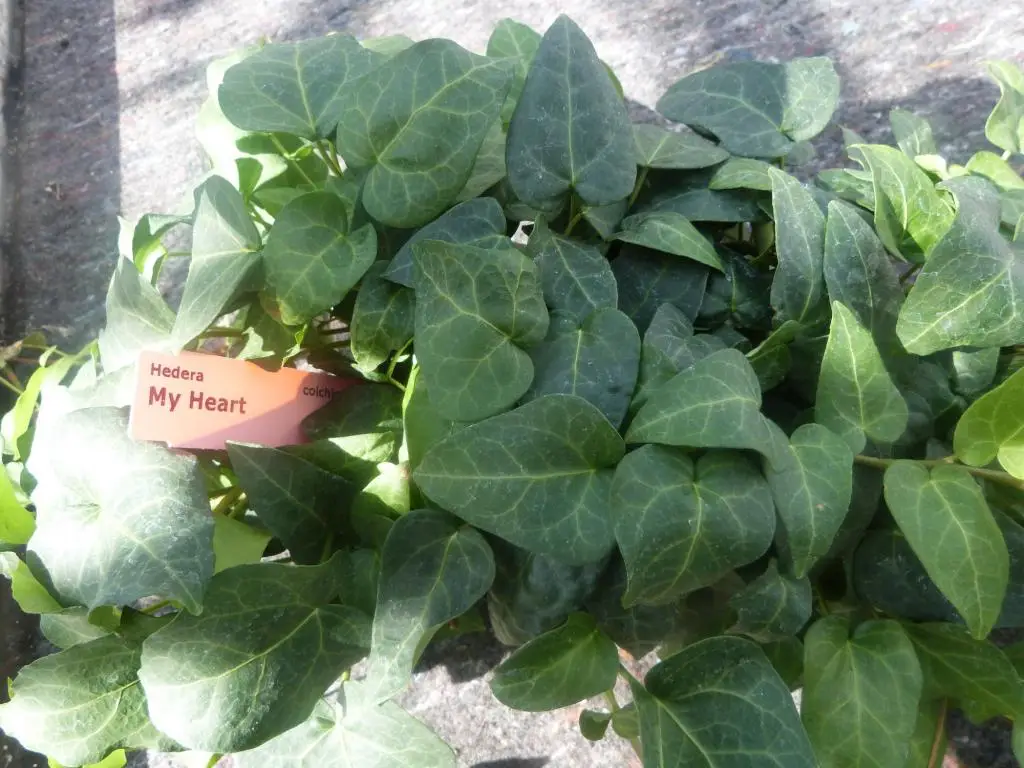
Perfect cordate leaf. Blade medium to dark green.

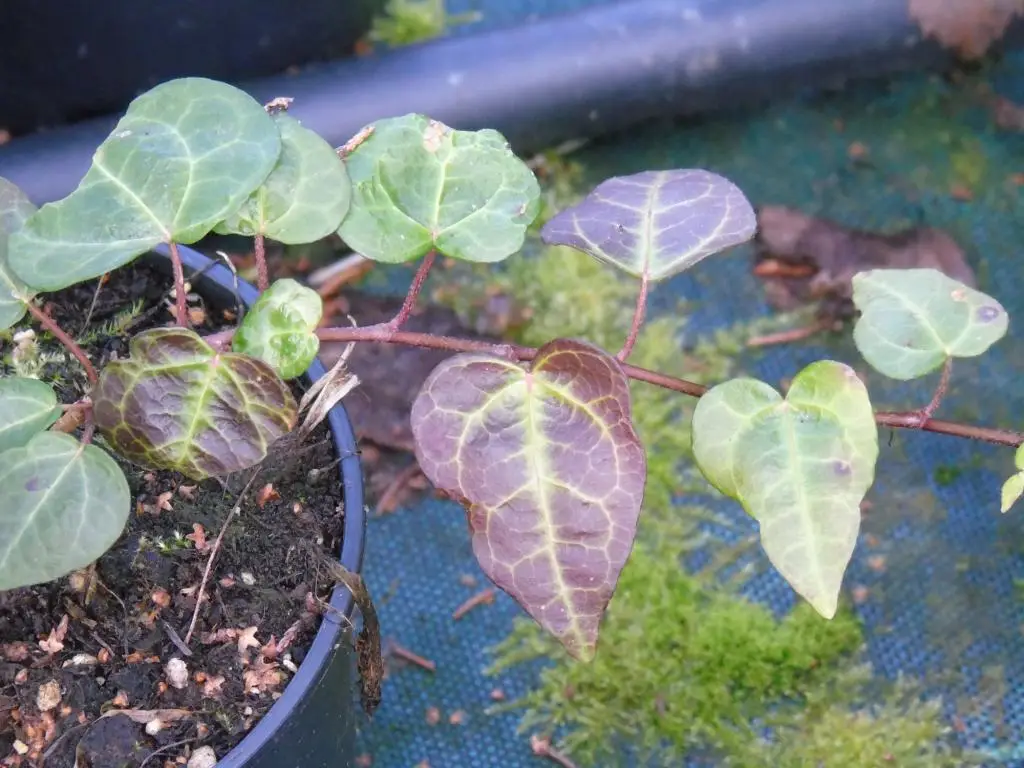
Red stems and petioles. Stems sparsely branched, with internodes of around 2 cm. Stalks short, around 1 cm.

Foliage turns bright red in winter, turning blood-red, making it the most vividly coloured of the entire collection.

From 5.90 

Clear
Category

Description

Caucasian ivy - Hedera colchica ‘My Heart’

In a nutshell

Caucasian ivy, Hedera colchica ‘My Heart’, It has a perfect cordate leaf with no lobes. The blade is medium to dark green.

The stems and petioles are red. The stems are very sparsely branched, with internodes of around 2 cm. The petioles are short, around 1 cm.

This ivy grows well, without being voluble. It is a good climber.

Another of its main attractions is that its foliage turns a deep red in winter, turning blood red - undeniably the most vividly coloured of all the varieties in our collection.

Technical details - Hedera colchica 'My Heart'

Botanical information

  • Family: Araliaceae
  • Genre : Hedera
  • Species : colchica
  • Cultivar : ‘My Heart’
  • Pierot classification: heart-shaped ivy
  • Foliage stage: juvenile
  • Origin of the species: Caucasus, western Asia
  • Origin of cultivar: unknown


Description of Hedera colchica ‘My Heart’

  • Growth habit: spreading
  • Number of lobes: unlobed
  • Leaf length: 4 to 5 cm
  • Sheet width: 3 cm
  • Leaf colour: medium to dark green
  • Colour of veins: light green
  • Stem: very little branching
  • Knot spacing: 2 cm
  • Length of petiole: 1 cm
  • Colour of stem and petiole: red
  • Hairs: scaly, composed of 12 to 20 branches


Planting, growing and care instructions for Hedera colchica ‘My Heart’

  • Exposure: shade, part shade, sun
  • Hardiness: -17°C
  • Growing : easy
  • Soil moisture: cool soil
  • Soil PH: neutral, calcareous or acidic
  • Soil type: all
  • Soil richness: ordinary or humus-bearing
  • Use: climbing
  • Development: medium
  • Pruning: once a year
  • Pests: very rare (spider mites, mealy bugs)
  • Diseases: very rare (leaf spots)

A page from my little ivy encyclopaedia

All about the health of my ivy

Ivy is rarely attacked by parasites. What's more, in the event of infestation, it is generally hardy enough to avoid irreversible damage. Potential pests include the ivy mealy bug

Ivy mealybug (Aspidiotus hederae)

This species of scale insect can be recognised by its circular, dull, uniform yellowish-brown shield covering its bright lemon-yellow body. These scale insects form mantles around the stems of ivy plants. They suck the sap, weakening the host plant.

In the event of an infestation, one of the most effective techniques for combating these mealybugs is to clean them manually with a cloth soaked in black soap or 70° alcohol, or with a soft toothbrush. You can also use neem oil sprays or macerations of garlic and chilli pepper as a natural insecticide.

Regular monitoring enables attacks to be detected as early as possible, making treatment much more effective.

La boutique du lierre - guirlande de lierre

Ivy in literature

“The old castle, engulfed by ivy, was a relic of the past swallowed up by nature.»

Walter Scott, The Pirate

Additional information

Weight N/A
Stock of 1-litre cups and pots

21 to 50 pots

Stock 2 or 4 litre containers

3 to 5 containers

Large stock items

0 big topic

General appearance

Spread

Type of foliage and colour

Atypical, Red in winter, Green

Possible uses

Climber

Exhibition

Part shade, Shade, Sun

Hardiness

Very good hardiness

Easy to grow

Easy

Speed

Average

Vigorous development

Medium

Classification according to the Pierot system

Heart-shaped

Reward obtained

No known reward

Reviews

There are no reviews yet.

Only logged in customers who have purchased this product may leave a review.

Find out more ...

Other interesting ivy plants for you