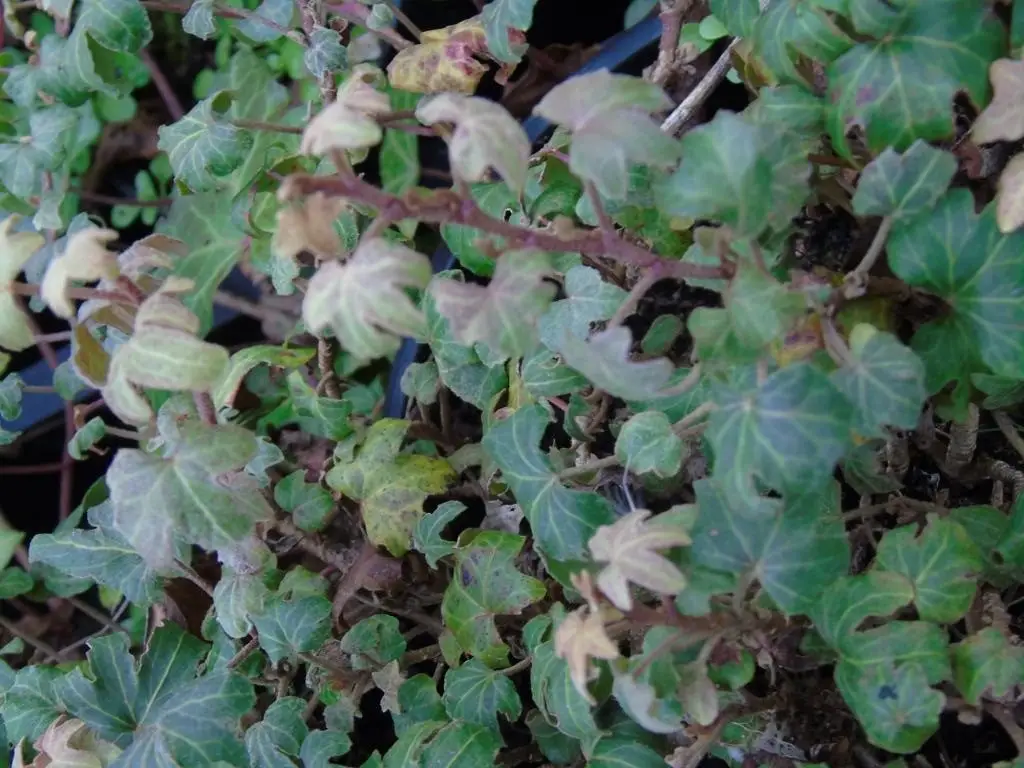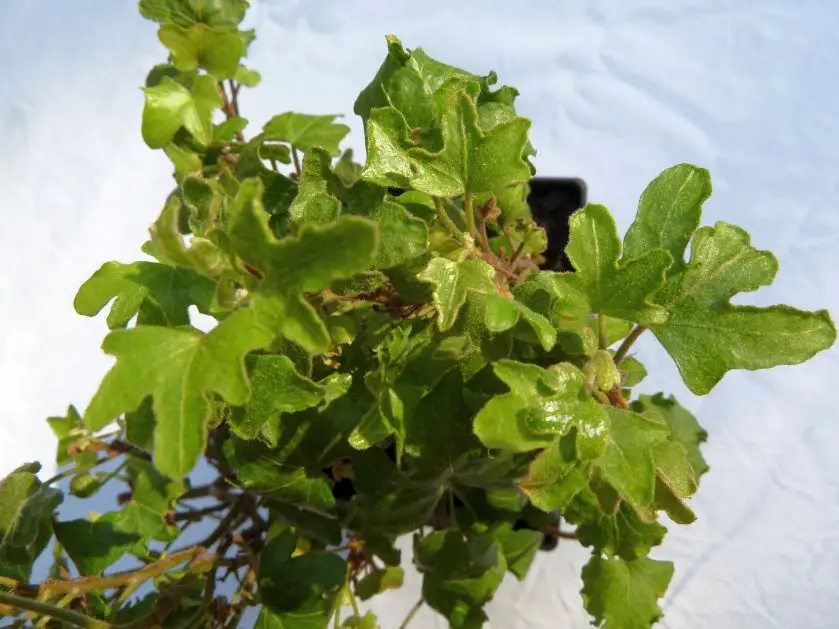
A highly branched plant with a bushy habit. Brownish-green shoots with short internodes.

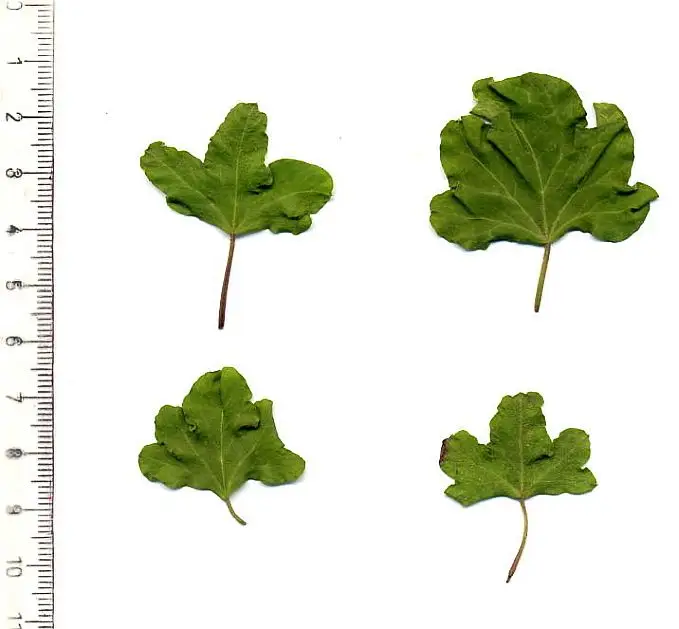
Leaves with 5 to 7 lobes. Basil lobes noticeably smaller. New leaves slightly curled downwards. Wavy leaf edges turning slightly upwards. Strong pubescence on new shoots, decreasing on older leaves. Leaf tips strongly rounded. Colour of foliage rather grey-green at maturity.

Good ground cover for small spaces.

From 5.90 

Clear
Category

Description

Ornamental ivy - Hedera helix ‘Dedos’

In a nutshell

Ornamental ivy, Hedera helix ‘Dedos’, This is a highly branched plant with a bushy habit. The shoots are brownish-green with short internodes.

The leaves are composed of 5 to 7 lobes. The basilar lobes are noticeably smaller. New leaves grow slightly curled downwards. In the adult state, the tips of the leaves remain curved downwards. The leaf margins are wavy, turning slightly upwards. What is striking is the strong pubescence of new shoots, which diminishes on older leaves. The leaf tips are strongly rounded. The colour of the foliage is grey-green at maturity. 

A good ground cover for small spaces.

History

This cultivar is a mutation of ‘Pixie’, discovered in 1997 by Patricia Hammer, who was President of the American Ivy Society.

Technical details - Hedera helix 'Dedos'

Botanical information

  • Family: Araliaceae
  • Genre : Hedera
  • Species : helix
  • Cultivar: ‘Dedos’
  • Pierot classification: bird's-foot ivy, wavy-curled leaves
  • Foliage stage: juvenile
  • Origin of the species: Europe, from Spain to Norway, but little on the Atlantic coast.
  • Origin of cultivar: mutation of ‘Pixie’


Description of Hedera helix ‘Dedos’

  • Growth habit: bushy, compact
  • Number of lobes: 5 to 7 lobes in general
  • Leaf length: 2 to 3 cm
  • Leaf width: 2.5 to 4 cm
  • Colour of leaf: greyish green
  • Colour of veins: light green
  • Branches: very branched
  • Internodes: approx. 1 cm
  • Colour of stem and petiole: greenish brown
  • Hairs: stellate, 3 to 5 branches


Planting, cultivation and maintenance advice for Hedera helix ‘Dedos’

  • Exposure: shade, part shade
  • Hardiness: -15°C
  • Growing : easy
  • Soil moisture: cool soil
  • Soil PH: neutral or chalky
  • Soil type: all
  • Soil richness: ordinary or humus-bearing
  • Use: ground cover, climber
  • Development: moderate
  • Pruning: once a year
  • Pests: very rare (spider mites, mealy bugs)
  • Diseases: very rare (leaf spots)

A page from my little ivy encyclopaedia

A new look at ivy ...

Is ivy a parasite?

Absolutely false!!!

Ivy uses spikes to cling to its support, but these spikes are not suckers!

They do not pump sap at all. They are not roots.

Ivy feeds exclusively from its roots in the ground.

Any botanist will tell you that ivy is not a parasitic plant.

It does not live off the plants it climbs.

La boutique du lierre - guirlande de lierre

Ivy in literature

“The ivy, discreet and faithful, lined the old barn with its green embrace.»

George Sand, La Mare au Diable

Additional information

Weight N/A
Stock of 1-litre cups and pots

6 to 10 pots

Stock 2 or 4 litre containers

11 to 20 containers

Large stock items

0 big topic

General appearance

Bushy, Compact

Type of foliage and colour

Curly or wavy, Green

Possible uses

Ground cover, Pots or planters

Exhibition

Part shade, Sun

Hardiness

Good hardiness

Easy to grow

Easy

Speed

Average

Vigorous development

Modest

Classification according to the Pierot system

From 'Pittsburgh', Wavy, curly or crisp, Bird's foot

Reward obtained

No known reward

Reviews

There are no reviews yet.

Only logged in customers who have purchased this product may leave a review.

Find out more ...

Other interesting ivy plants for you