
Irish ivy
Irish ivy, or Hedera hibernica from its botanical name, is a plant climber with foliage persistent. So you can enjoy it all year round:
- in spring, Irish Ivy forms charming young, soft green leaves
- in summer, the leaves turn a darker colour
- in autumn, if the ivy has reached its adult stage, it forms flowers in the form of cream-coloured umbels
- in winter, the fruit appears in the form of black berries when ripe
You won't be the only one to appreciate this plant: insects, especially foragers, flock to its flowers at the end of the season. As for the birds, they feast on its fruit at the end of winter. It's a plant very interesting and very useful from an ecological point of view, It provides food and shelter for a whole host of microfauna and a wide range of birds. It is one of the essential plants for anyone who wants a garden that looks as good as it looks. promoting biodiversity.
Description of Irish ivy :
The leaves are 4 to 9 cm wide and 4 to 11 cm long. Their colour ranges from pale to dark green. They are much larger than those of common ivy (Hedera helix). They usually have 3 or 5 lobes, of varying depths. The general shape is rather webbed, with a heart- or arrow-shaped base. This ivy has tiny, whitish, star-shaped hairs on the leaves and petioles. These details may seem incidental, but they are key to identifying the different species of ivy. The adult leaves of this ivy are elliptical, without lobes. They flower between June and December and ripen between September and April. It is a climbing ivy with fairly rapid growth which can cover a wall in no time at all. It can also be used to form hedges, or to dress the trunk of a tree.
Origin of ivy Hedera hibernica :
Generally speaking, ivy is native to Europe, North Africa and Asia. The Irish ivy, scientifically known as the Hedera hibernica, are plants that grow more specifically over a wide area of the Atlantic coast, From Spain and Portugal to Scotland, France and, of course, Ireland, as the name suggests.
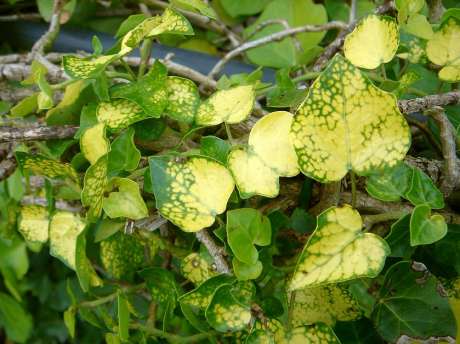
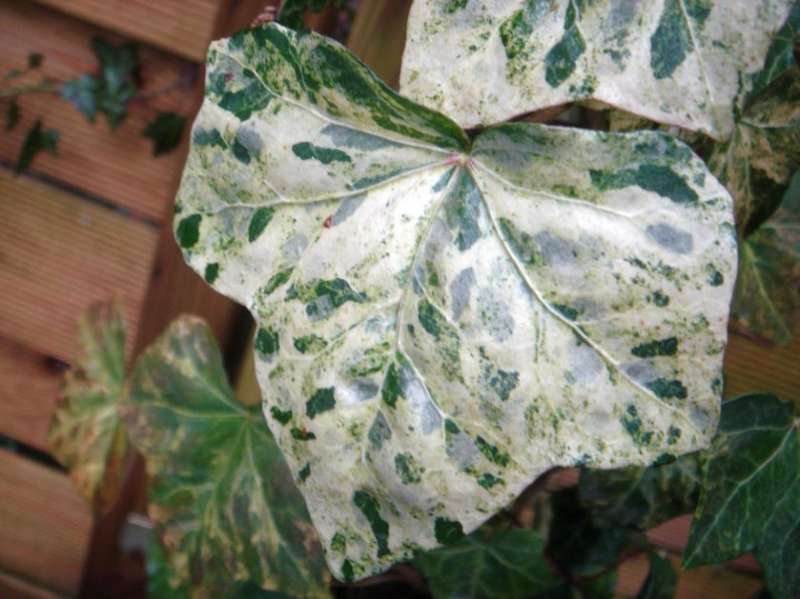
Growing conditions and planting advice for Irish ivy :
Ivy is one of the easiest plants to grow in our gardens. It is not demanding in terms of soil type: chalky soil, neutral soil or acidic soil are all suitable (unlike common ivy). Hedera helix). In terms of exposure, it grows in both sun and shade. It can be found, for example, as a ground cover on rocks by the sea, in full sun. However, it is generally agreed that Irish Ivy prefers shade or part-shade. It is fairly drought-resistant, but will thrive best in cool soil. If the soil is good, i.e. sufficiently rich in humus, no fertiliser will be needed.
How can Irish ivy be used in the garden?
Ivy can be easily integrated into any garden, small or large. Unlike other perennials or climbers, it has the advantage of staying green and beautiful all year round. Hiding an unsightly wall, forming hedges to protect privacy, covering the ground under trees, including fruit trees, dressing up the wall of a facade - almost anything is possible with this type of plant. If you're planning to plant an ivy hedge, you'll need to install a wire mesh to support it. Allow 2 to 3 ivy plants per linear metre.
However, there are a few uses for ivy that are less recommended: avoid placing it in the middle of rose bushes, as it will tend to suffocate them. The combination of bulbs and ivy is not a happy one either.
But there are so many other possibilities with this type of plant. In any case, plan to prune every year, for example at the end of winter. The aim is to keep the ivy in the area or on the surface that you have set aside for it. Be aware that ivy is a plant that tolerates severe pruning very well, so if you've neglected maintenance for a year or two, you can correct this with a vigorous pruning. Irish ivy as ground cover offers another significant advantage: weeds are virtually non-existent, as they are smothered by the ivy.
Buy Irish ivy
On this site you will find more than twenty varieties of Irish ivy. It is the widest choice of all online plant sales sites. You'll find all the information you need about plant sizes and prices. We dispatch the plants you order every Monday. Your order will therefore be delivered within a week of placing it. Our stock is both large and limited. We have a large stock of different types of ivy. But we have a limited stock of each type of ivy. However, if you require large quantities of certain products, we can grow the variety you want. To help you choose the right product for you, here are the main characteristics of the Irish ivy in our collection:
- Hedera hibernica ‘Albany’ Good ground cover, brown foliage in winter.
- ... ‘Angularis Aurea’ vigorous climbing ivy, yellow leaves in spring.
- ... ‘Arco’ : thinner vegetation, bronze tones in winter.
- Hedera hibernica ‘Betty Allen’ Ivy with shiny dark green foliage.
- Hedera hibernica ‘China Plate’ Large shiny leaf.
- Hedera hibernica ‘Dealbata’ White variegation that turns pink in the cold.
- ... ‘Deltoidea’ Ivy: perfect for pots or window boxes.
- ... ‘Digitata’ Digitized foliage.
- Hedera hibernica ‘Ebony’ Blackish-green foliage in winter.
- Hedera hibernica ‘Glengariff’ Light yellow veining, good climber.
- Hedera hibernica ‘Hamilton’ vigorous-growing ivy.
- ... ‘Harlequin’ Yellow variegated leaves.
- Hedera hibernica ‘Maculata’ vigorous climbing ivy.
- Hedera hibernica ‘Palmata’ plant with thick, green leaves.
- ... ‘Professor Seneta’ Dark green leaves mottled with cream.
- Hedera hibernica ‘Rona’ This plant has marbled yellow-green foliage. In our opinion, one of the most beautiful.
- Hedera hibernica ‘Sark’ Heart-shaped leaf. A must for the garden.
- ... ‘Sulphurea’ Ivy: perfect as ground cover in the shade.
- Hedera hibernica ‘Tesselata’ Light yellow foliage in spring.
- Hedera hibernica ‘Light Green’ Reddish mottling of the leaves in the cold season.
- ... ‘Vitifolia’ Vine-leaved climbers.
- Hedera hibernica ‘Zorgvlied’ A small bush with beautiful winter colours.
To help you make the right choice from among all these plants, take a look at the description and discover lots of additional details, as well as photos, prices and container sizes. When you receive your plants, soak your pots before planting and follow our advice carefully.


 Français
  English (UK)
  Deutsch
  Nederlands
  Italiano


