Description
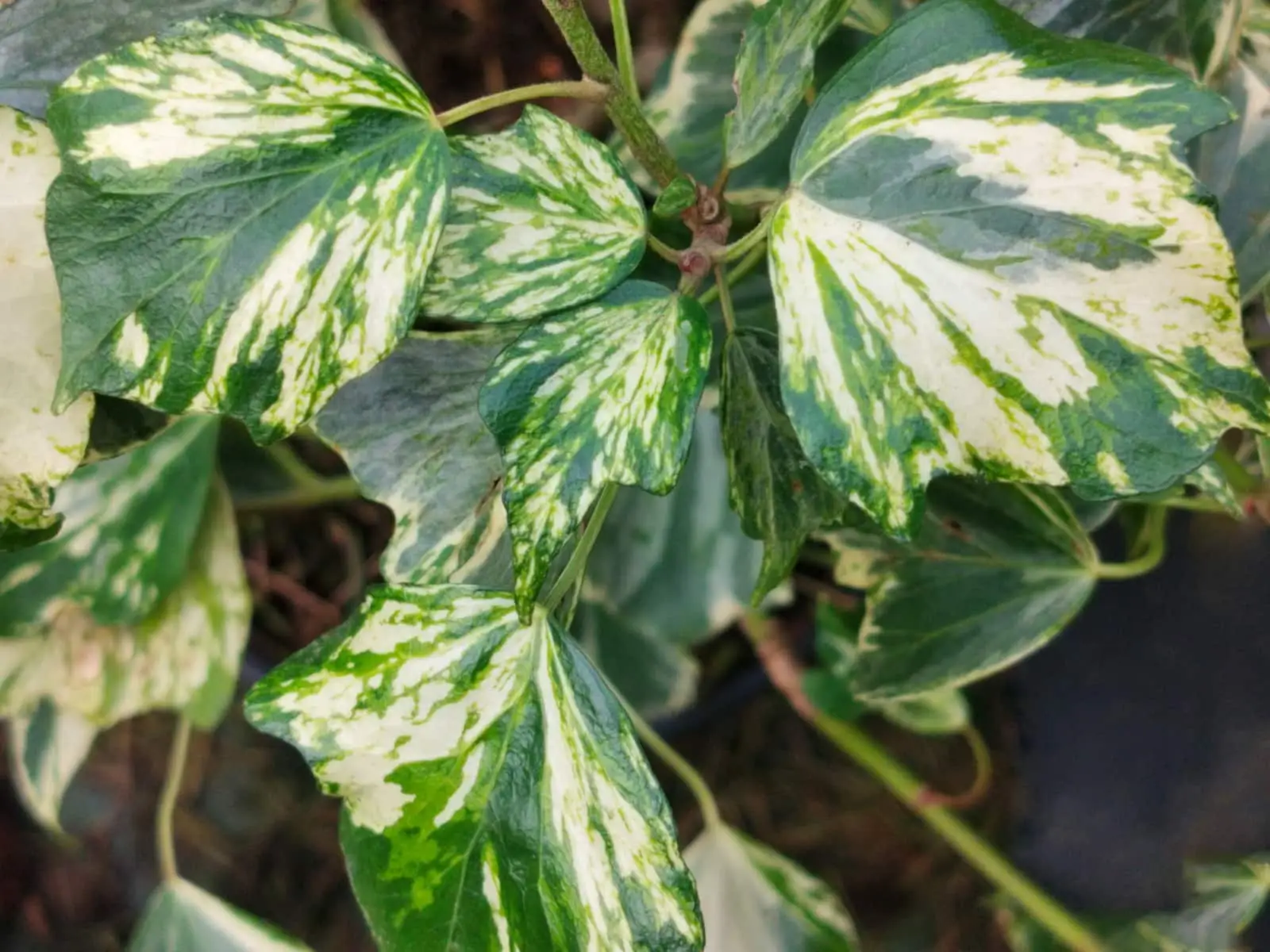
Ornamental ivy - Hedera helix ‘Nadine’ adult
In a nutshell
Nadine‘ ivy was collected by Olivier Arcelus from the garden of an enthusiast ... Nadine.
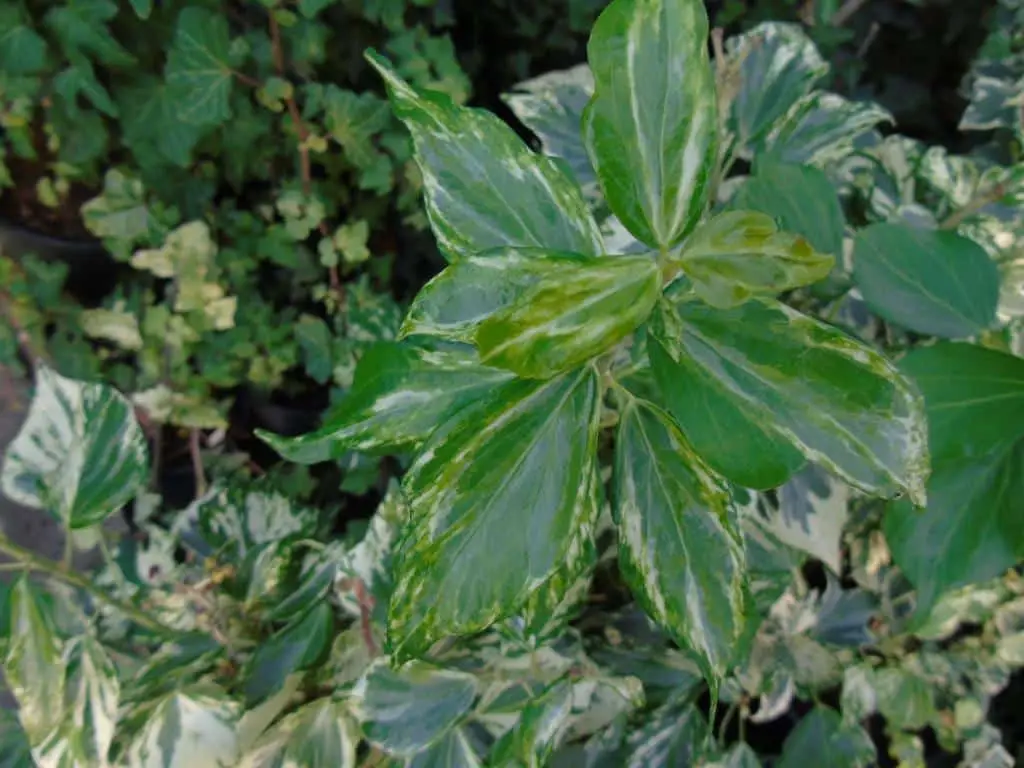
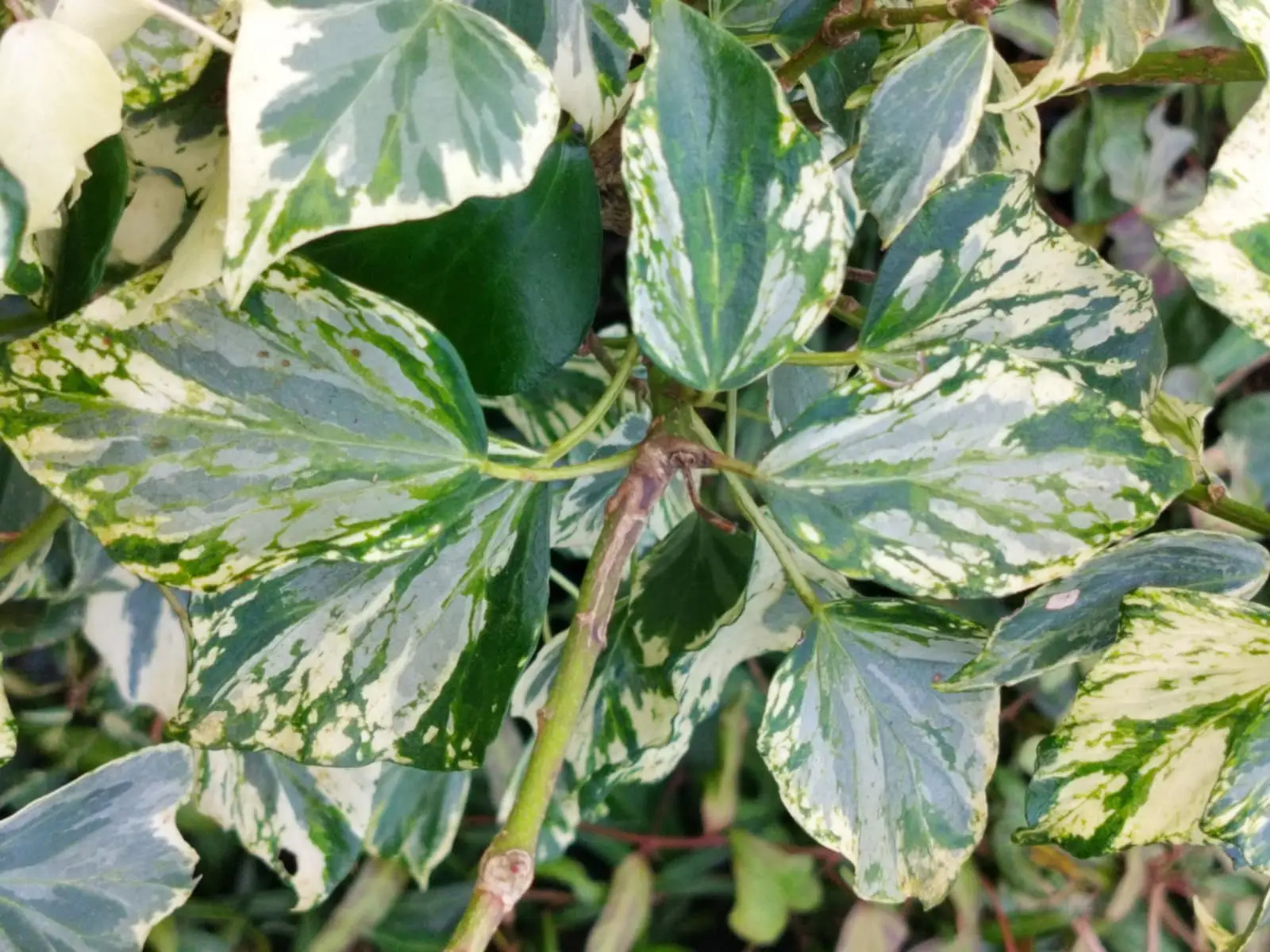
Here it is in its adult version. Hedera helix ‘Nadine’ adult forms a small, beautifully variegated bush, with shades of yellow-green and apple-green on a cream to white background.
In autumn, it flowers in greenish umbels. The fruit that follows remains until spring in the form of green then black berries.
History
This cultivar comes from a cutting taken by Olivier Arcelus from the garden of an enthusiast called Nadine.
Technical details - Adult Hedera helix 'Nadine
Botanical information
- Family: Araliaceae
- Genre : Hedera
- Species : helix
- Cultivar : ‘Nadine’
- Pierot classification: adult ivy
- Foliage stage: adult
- Origin of the species: Europe, from Spain to Norway, but little on the Atlantic coast.
- Origin of the cultivar: discovered by Olivier Arcelus
Description of mature Hedera helix ‘Nadine
- Growth habit: shrubby, compact
- Number of lobes: unlobed
- Leaf length: 5 cm
- Sheet width: 4 cm
- Leaf colour: variegated shades of green on a white background
- Colour of veins: cream
- Colour of stem and petiole: green
- Flowering period: September to October
- Flowering colour: greenish umbels
- Fructification: black berries
- Fruiting period: November to April
- Hairs: stellate, 3 to 5 branches
Planting, growing and care instructions for mature Hedera helix ‘Nadine
- Exposure: sun, part shade, shade
- Hardiness: -15°C
- Soil moisture: cool soil
- Soil PH: neutral or chalky
- Soil type: all
- Soil richness: ordinary or humus-bearing
- Use: pot, window box, rockery, houseplant, free-standing
- Development: moderate
- Pruning: once a year
- Pests: very rare (spider mites, mealy bugs)
- Diseases: very rare (leaf spots)
A page from my little ivy encyclopaedia
The question of circumstance
What is mature ivy?
As it develops, ivy goes through 3 successive stages.
1 - Initially, it crawls on the ground and forms adventitious roots that enable it to crawl further and further, forming an evergreen carpet. This is the juvenile stage.
2 - When it encounters a support, it starts to climb. Instead of adventitious roots, it forms spikes that enable it to climb higher and higher. This is the semi-adult stage.
3 - when it can see enough light, it enters its third stage, known as the mature stage. It now has horizontal branches, rather like a shrub. In autumn, it flowers in greenish umbels that are much appreciated by pollinating and foraging insects. These flowers give rise to berries that gradually ripen over the winter and are eaten by birds.
Adult ivy is therefore of great interest for biodiversity.
By taking cuttings from the parts of an ivy plant corresponding to the adult stage, we obtain adult ivy of the shrub type.
Ivy in literature
“The old bridge, shrouded in ivy, seemed to be waiting patiently for time to take its toll.”


Reviews
There are no reviews yet.