Description
Irish ivy - Hedera hibernica ‘Rona’
In a nutshell
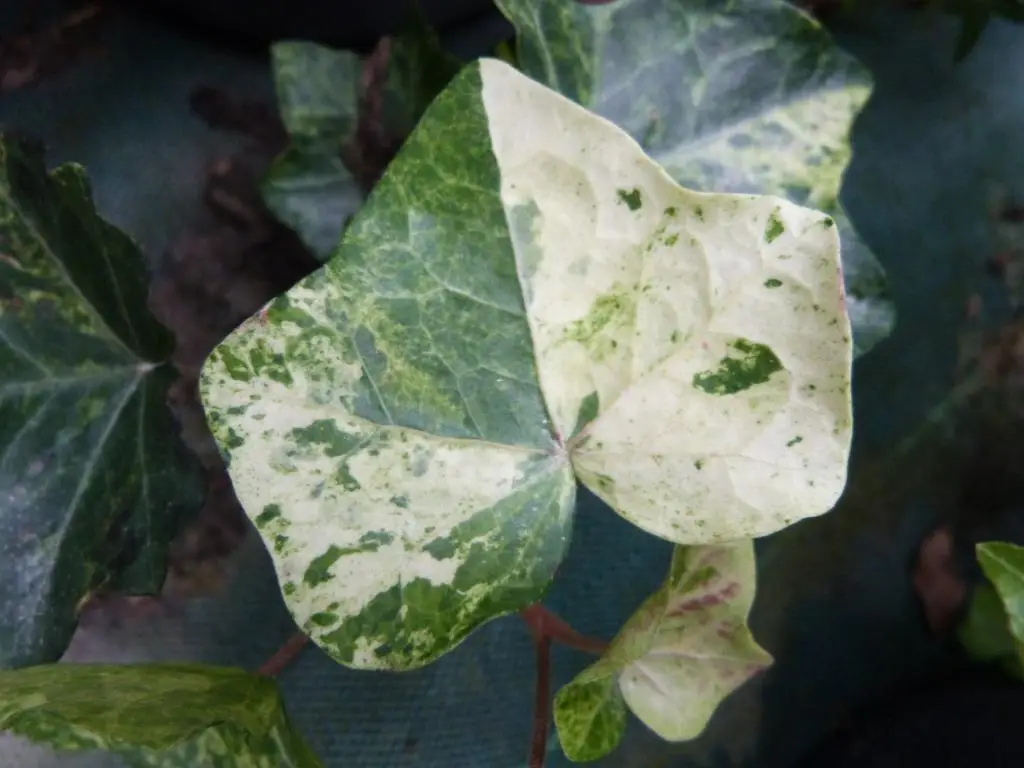
Irish ivy, Hedera hibernica ‘Rona’, The leaves are as broad as they are long, with 5 lobes.
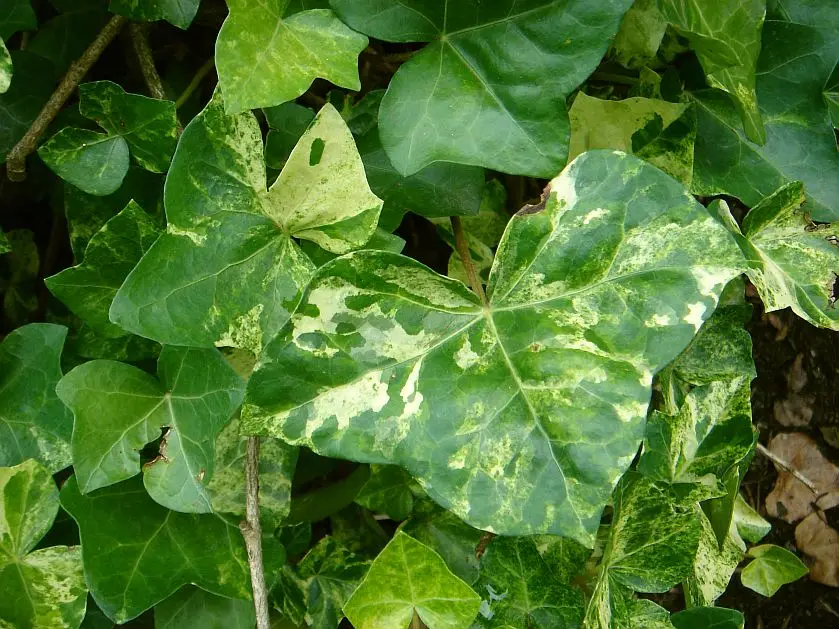
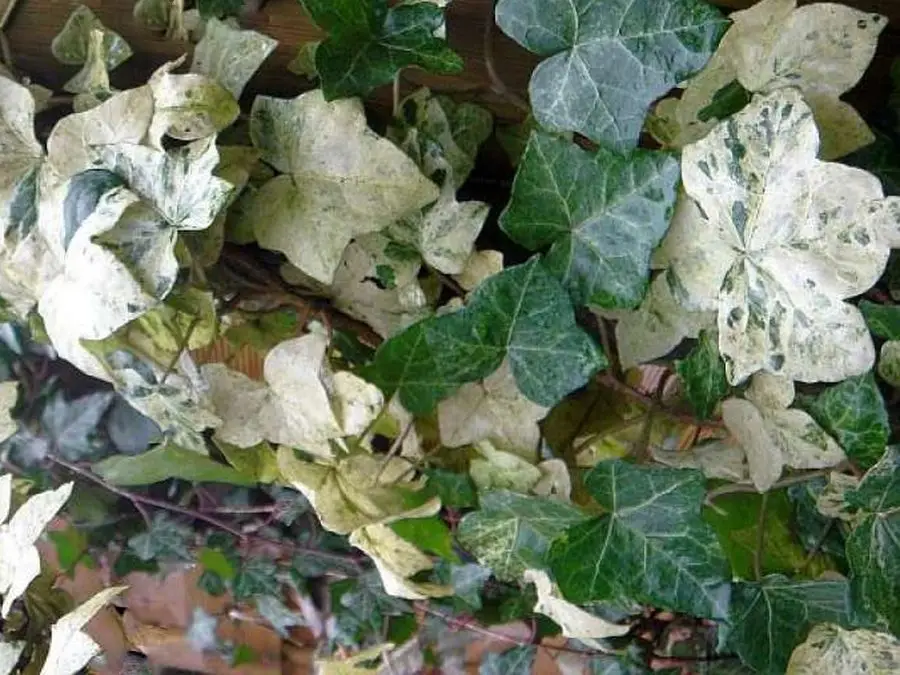
The leaf blade is speckled with green on a yellow background. Sometimes the leaf blade is entirely yellow. At other times, only half the leaf blade is variegated. The stems are thick and more or less branched.
This is a moderate-growing ivy that is particularly suitable for pots.
History
This cultivar was discovered in the United States in 1975 by Mrs Rona Schaepman, wife of one of the presidents of the American Ivy Society.
Technical details - Hedera hibernica 'Rona'
Botanical information
- Family: Araliaceae
- Genre : Hedera
- Species : hibernica
- Cultivar: ‘Rona’
- Pierot classification: standard ivy, variegated ivy
- Foliage stage: juvenile
- Origin of the species: Europe, Atlantic coast, from Portugal to Scotland
- Origin of cultivar: discovered in 1975 by Rona Schaepman, wife of the president of the American Ivy Society at the time.
Description of Hedera hibernica ‘Rona’
- Growth habit: spreading
- Number of lobes: usually 5 lobes
- Leaf length: 8 cm
- Sheet width: 8 cm
- Colour of leaf: yellow speckled with green
- Colour of veins: cream
- Colour of stem and petiole: purple green
- Hair: stellate, small
Advice on planting, cultivation and care of Hedera hibernica ‘Rona’
- Exposure: part shade
- Hardiness: -12°C
- Soil moisture: cool soil
- Soil PH: all
- Soil type: all
- Soil richness: ordinary or humus-bearing
- Use: ground cover, climber, pot, window box, houseplant
- Development: moderate
- Pruning: once a year
- Pests: very rare (spider mites, mealy bugs)
- Diseases: very rare (leaf spots)
A page from my little ivy encyclopaedia
All your questions about ivy
Where to plant ivy?
Ivy is a versatile plant that can thrive in a variety of conditions.
- Ivy is ideal for covering walls and fences, creating an aesthetic effect while masking less attractive surfaces.
- It climbs easily up vertical surfaces thanks to its aerial roots, adding greenery to brick, stone or wooden walls.
- Ivy can be planted at the foot of trees, where it climbs to create a natural effect. It is often used in woodland gardens.
- Ivy is effective for stabilising slopes and embankments, thanks to its dense root system that helps prevent soil erosion.
- Ivy can be grown in hanging pots or window boxes, where it falls elegantly, bringing greenery indoors or to balconies.
- Ivy tolerates shade well and can be planted in areas with little sunlight where other plants find it difficult to thrive, such as under trees or against north walls.
- Ivy adapts well to damp soil, making it a good option for banks or damp areas in your garden.
- Ivy is often used in urban environments to green buildings and improve the aesthetics of public spaces.
- On the façades of buildings, it can help to regulate indoor temperature by providing natural insulation.
Ivy in literature
“She leaned against the ivy-covered wall, searching for a way out of her thoughts.”


Reviews
There are no reviews yet.