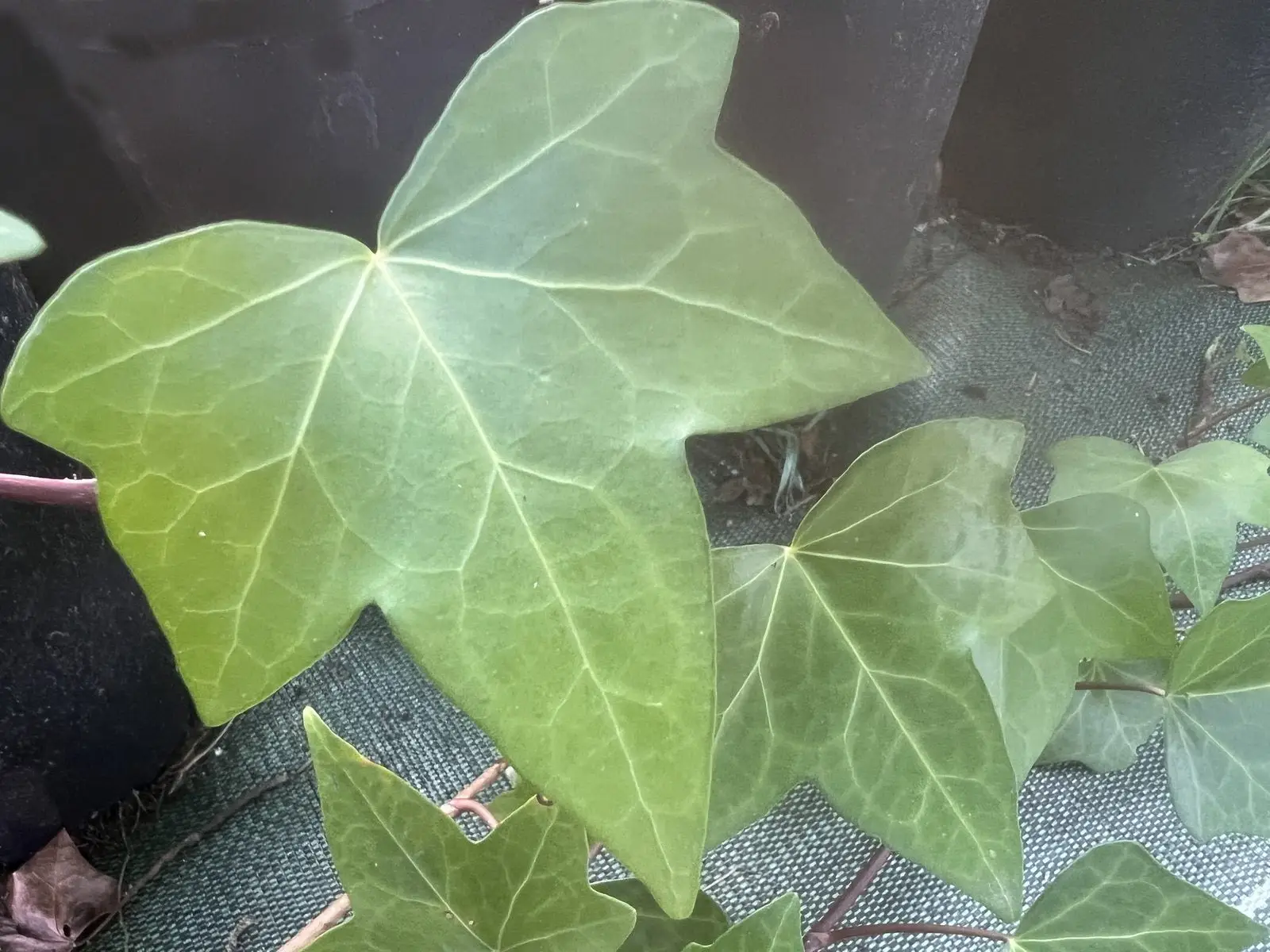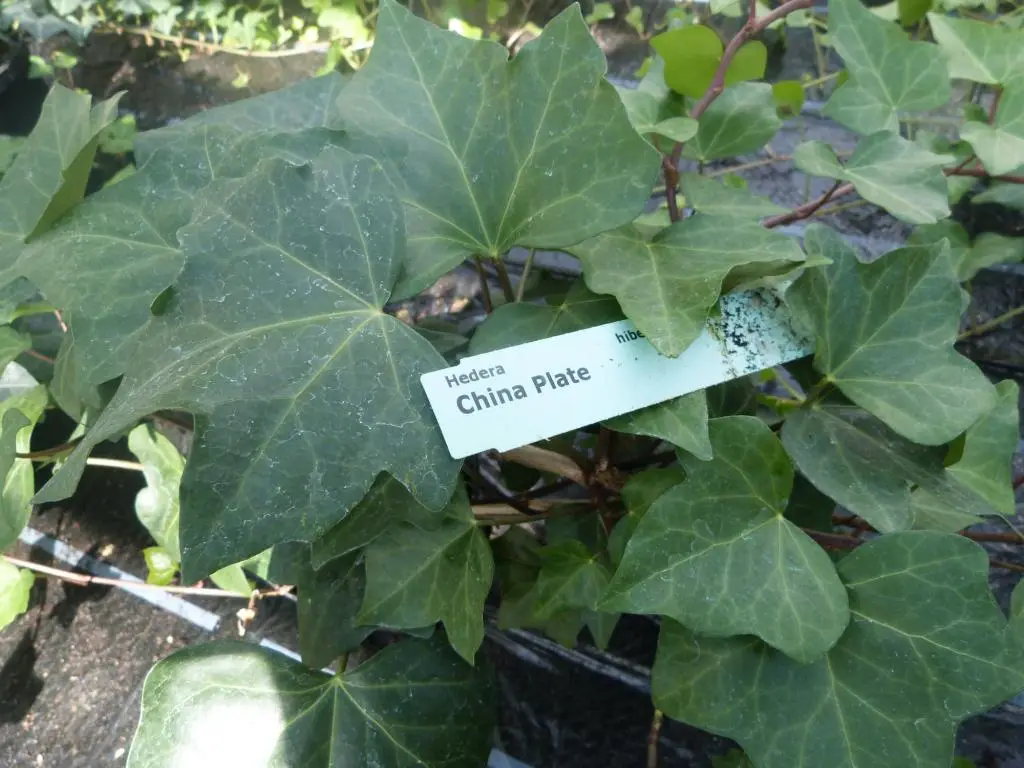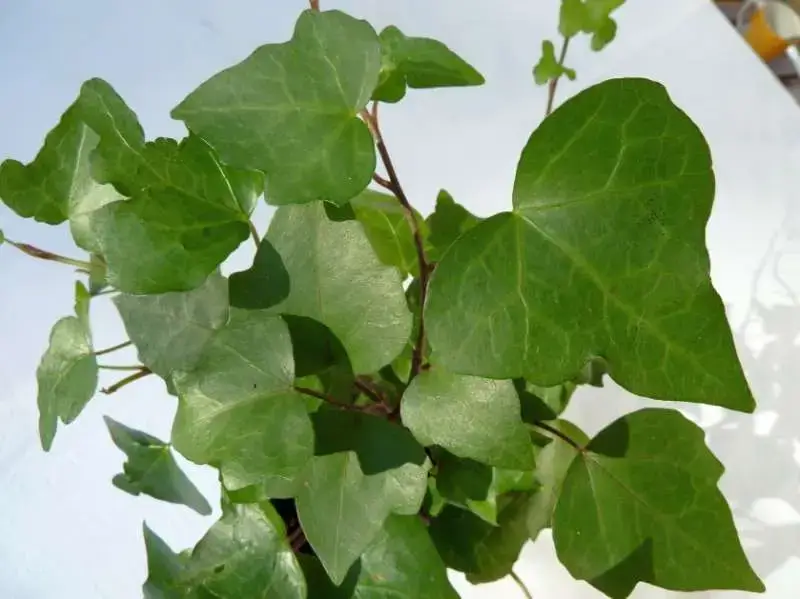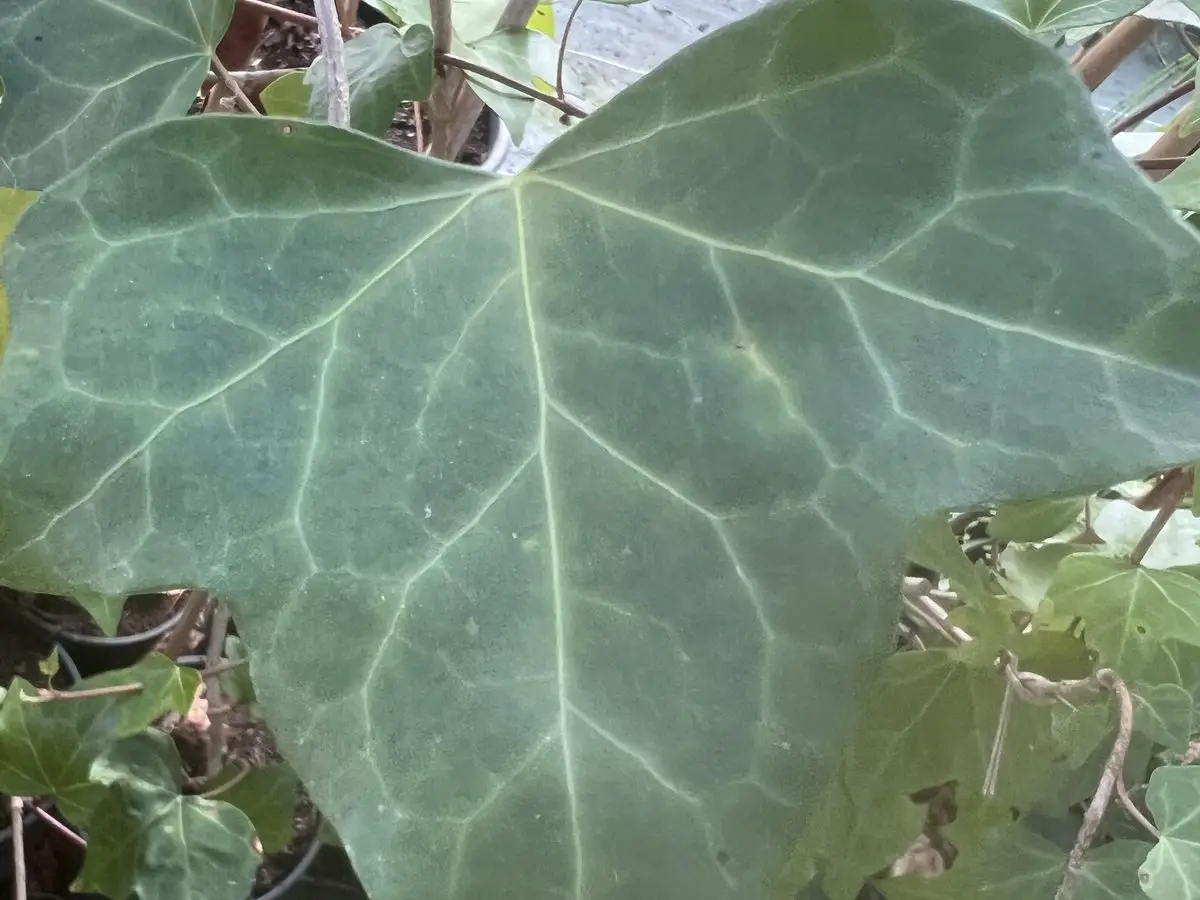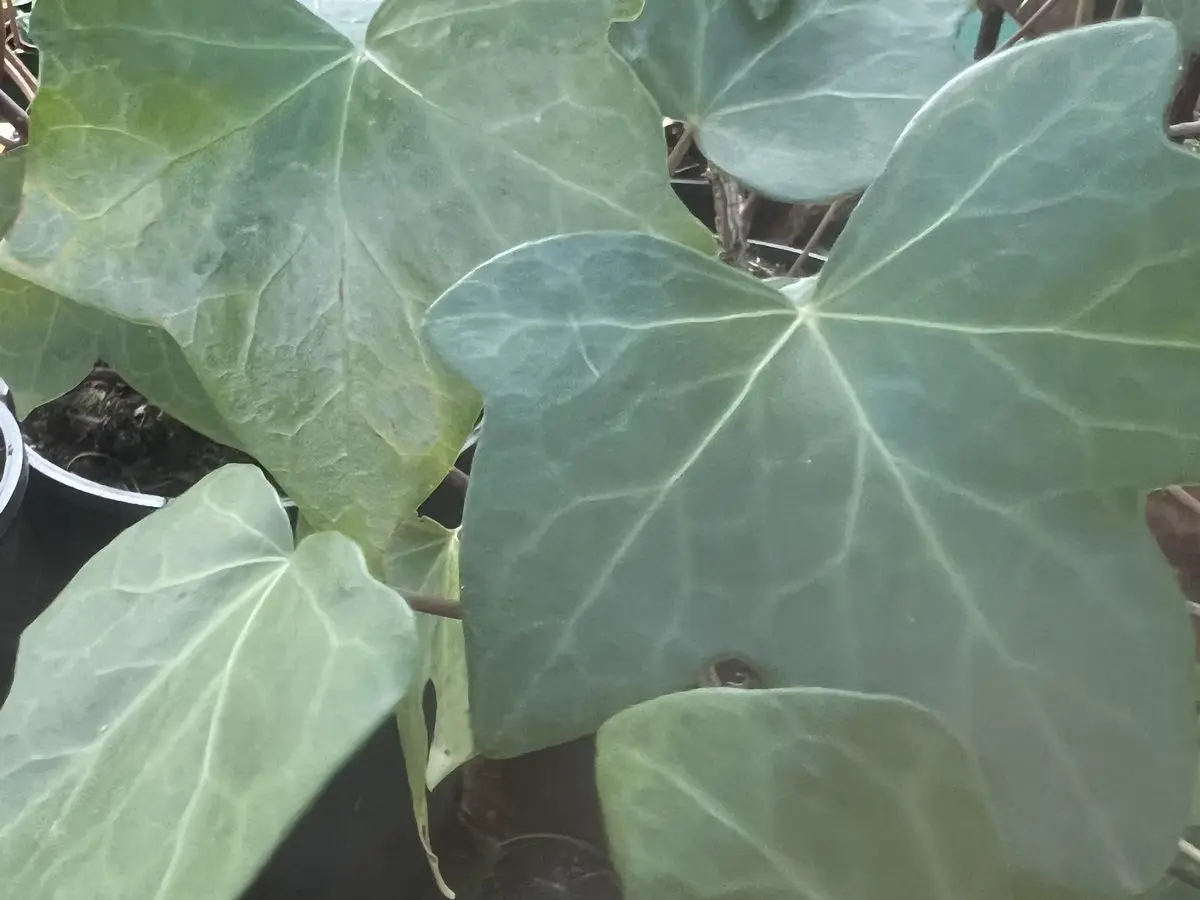
Broad, dark green, curved foliage with an attractive sheen. Leaves with 3 to 5 lobes, more or less deep and usually pointed. Stalks up to 15 cm long, dark red in colour.

Stem sparsely branched, internodes about ten centimetres apart.

An ivy with a shallow bedding that makes a good, fast-growing climber.

From 5.90 

Clear
Category

Description

Irish ivy - Hedera hibernica ‘China Plate’

In a nutshell

Irish ivy, Hedera hibernica ‘China Plate’, This variety has broad, curved, dark green, shiny foliage. The leaves have 3 to 5 lobes, varying in depth and usually pointed. The dark red petioles can reach 15 cm in length.

The stem has few branches and the internodes are about ten centimetres apart.

This is an ivy with a thin mat, which makes a good, fast-growing climber.

History

This cultivar was discovered in 1975 in Newborough Wood, Northamptonshire, United Kingdom.

Technical details - Hedera hibernica 'China Plate'

Botanical information

  • Family: Araliaceae
  • Genre : Hedera
  • Species : hibernica
  • Cultivar: ‘China Plate’
  • Pierot classification: ivy type
  • Foliage stage: juvenile
  • Origin of the species: Europe, on the Atlantic coast, from Portugal to Scotland
  • Origin of cultivar: found in Newborough Wood, Northamptonshire, United Kingdom, in 1975


Description of Hedera hibernica ‘China Plate’

  • Growth habit: spreading
  • Number of lobes: 3 to 5 lobes in general
  • Leaf length: 10 cm
  • Sheet width: 12 cm
  • Colour of leaf: medium to dark green, shiny
  • Colour of veins: green
  • Stem: lightly branched
  • Petiole length; up to 15 cm
  • Mattress thickness: not very thick
  • Node spacing: 10 cm
  • Colour of stem and petiole: red
  • Hair: stellate, small


Advice on planting, growing and caring for Hedera hibernica ‘China Plate’

  • Exposure: shade, part shade, sun
  • Hardiness: -15°C
  • Soil moisture: cool soil
  • Soil PH: neutral, calcareous or acidic
  • Soil type: all
  • Soil richness: ordinary or humus-bearing
  • Use: climbing
  • Development: vigorous, rapid
  • Pruning: once a year
  • Pests: very rare (spider mites, mealy bugs)
  • Diseases: very rare (leaf spots)

A page from my little ivy encyclopaedia

The occasional question ...

What is a curved sheet?

The vocabulary used by botanists to describe plants is very rich. For leaves alone, you can come across dozens of specific terms.

A leaf is said to be curved when its edges are curved upwards, The opposite of ‘curved’ is 'scurved'. The opposite of 'curved' is recurved, i.e. curved downwards.

Discover all the vocabulary used to describe leaves.

La boutique du lierre - guirlande de lierre

Ivy in literature

“Ivy, a symbol of persistence, covered the forgotten gravestone.

William Faulkner, Noise and Fury«

Additional information

Weight N/A
Stock of 1-litre cups and pots

6 to 10 pots

Stock 2 or 4 litre containers

11 to 20 containers

Large stock items

0 big topic

General appearance

Spread

Type of foliage and colour

Green

Possible uses

Climber

Exhibition

Part shade, Shade, Sun

Hardiness

Good hardiness

Easy to grow

Easy

Speed

Fast

Vigorous development

Vigorous

Classification according to the Pierot system

Ivy type

Reward obtained

No known reward

Reviews

There are no reviews yet.

Only logged in customers who have purchased this product may leave a review.

Find out more ...

Other interesting ivy plants for you