Description
Caucasian ivy - Hedera colchica ‘Dentata Variegata’ (Caucasian ivy)’
In a nutshell
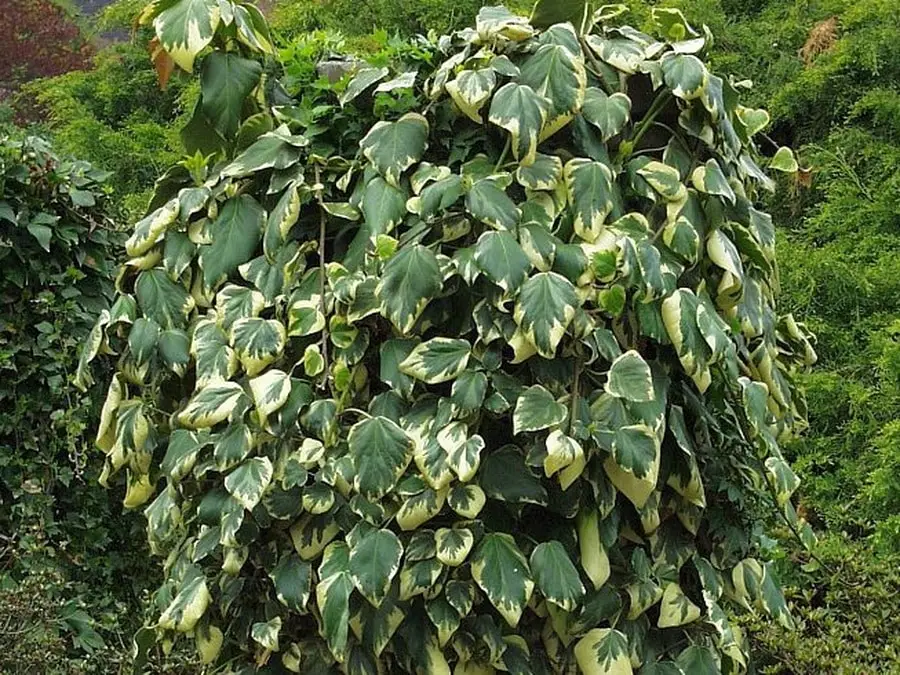
Caucasian ivy, Hedera colchica ‘Dentata Variegata’, This particularly attractive ivy has large, variegated, leathery, pointed leaves that hang elegantly. Despite the delicately rolled, often shallowly toothed margins, the broad, creamy or yellow margins are clearly visible.
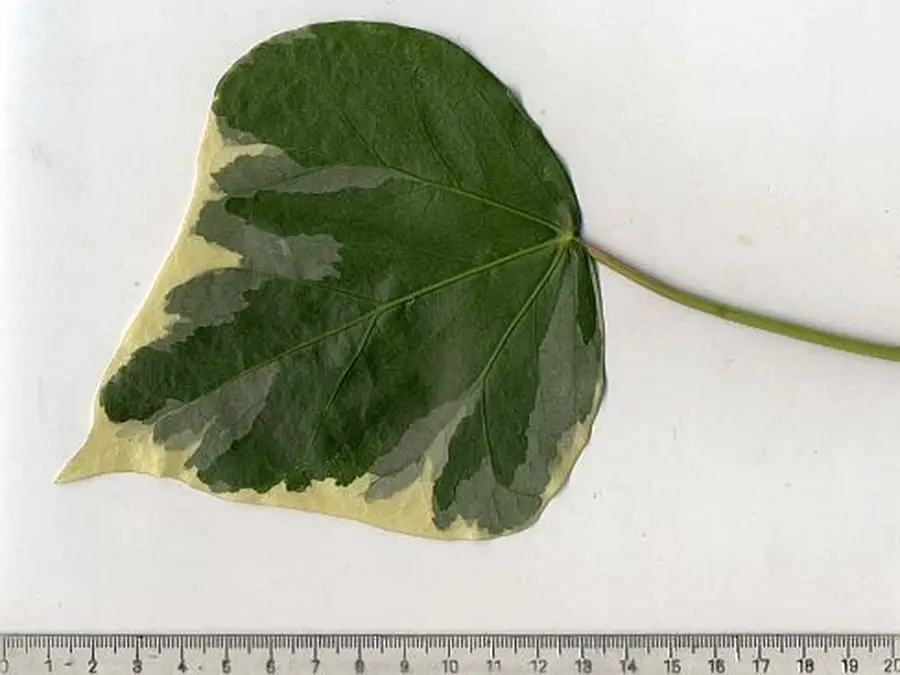
The leaf blade is adorned with large pale green, grey, cream or yellow spots, which are as conspicuous when crawling as when climbing.
This fast-growing ivy is significantly hardier than most other variegated ivies. It can withstand frost and strong winds just as well as ‘Dentata’, and is more resistant to scorching in full sun.
This cultiva was awarded the Royal Horticultural Society (RHS) Garden Award of Merit in 1993.
History
This cultivar was discovered by the nurseryman L. R. Russell in a private garden in Richmond, London, in the 1900s. It is probably a mutation of Hedera colchica ‘Dentata’.
Technical details - Hedera colchica 'Dentata Variegata'
Botanical information
- Family: Araliaceae
- Genre : Hedera
- Species : colchica
- Cultivar: ‘Dentata Variegata’
- Pierot classification: heart-shaped ivy, variegated ivy
- Foliage stage: juvenile
- Origin of the species: Caucasus, western Asia
- Origin of cultivar: found in a private garden in Richmond, London, in the 1900s by the nurseryman L. R. Russell.
Description of Hedera colchica ‘Dentata Variegata’
- Growth habit: spreading
- Number of lobes: generally unlobed
- Leaf length: 20 cm
- Sheet width: 12 cm
- Leaf colour: grey-green in the centre, with cream and yellow margins
- Colour of veins: yellow-green
- Stem: more or less branched
- Colour of stem and petiole: purple green
- Hairs: scaly, composed of 12 to 20 branches
Planting, growing and care instructions for Hedera colchica ‘Dentata Variegata’
- Exposure: shade, part shade, sun
- Hardiness: -17°C
- Soil moisture: cool soil
- Soil PH: neutral, calcareous or acidic
- Soil type: all
- Soil richness: ordinary or humus-bearing
- Use: ground cover, climber, pot, window box
- Development: rapid, moderate
- Pruning: once a year
- Pests: very rare (spider mites, mealy bugs)
- Diseases: very rare (leaf spots)
A page from my little ivy encyclopaedia
All about the health of my ivy
Ivy is rarely attacked by parasites. What's more, in the event of infestation, it is generally hardy enough to avoid irreversible damage. Potential pests include the common tarsonema.
The common tarsonema (Phytonemus pallidus)
This mite, measuring between a quarter and a tenth of a millimetre, is most common in glasshouses. The male is yellow and the female is light brown.
Attacked leaves wrinkle, discolour and break. Younger leaves curl.
As a preventive measure, it is advisable to maintain a moist, well-ventilated environment. In the event of infestation, apply a generous drench to both sides of the leaves and repeat for several days. If the infestation persists, treatment with an acaricide soap or Neem oil may be necessary.
Regular monitoring enables attacks to be detected as early as possible, making treatment much more effective.
Ivy in literature
“Under the ivy, the stones told stories that only the trees could hear.”


Reviews
There are no reviews yet.