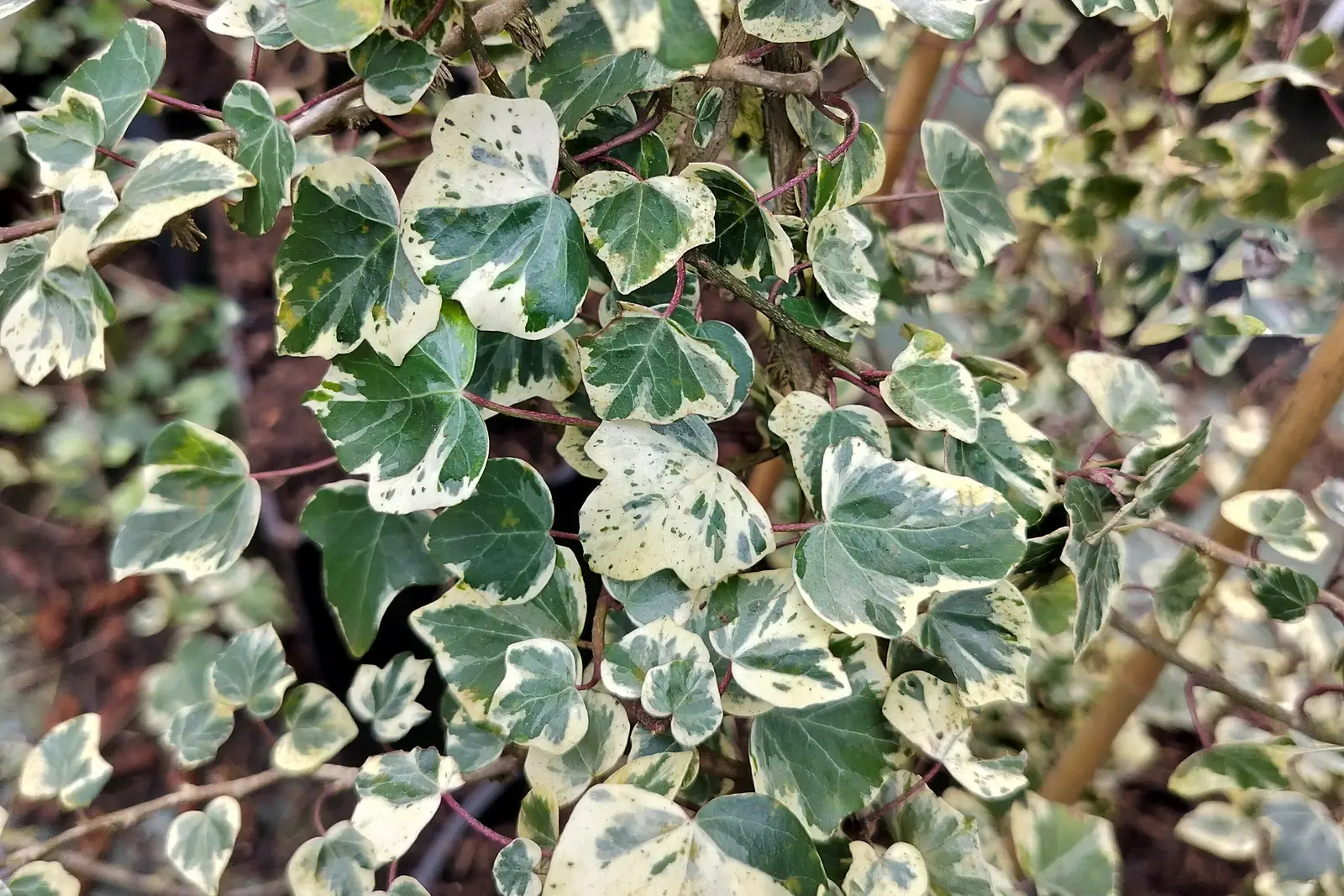
A medium-growing, climbing plant with numerous branches.

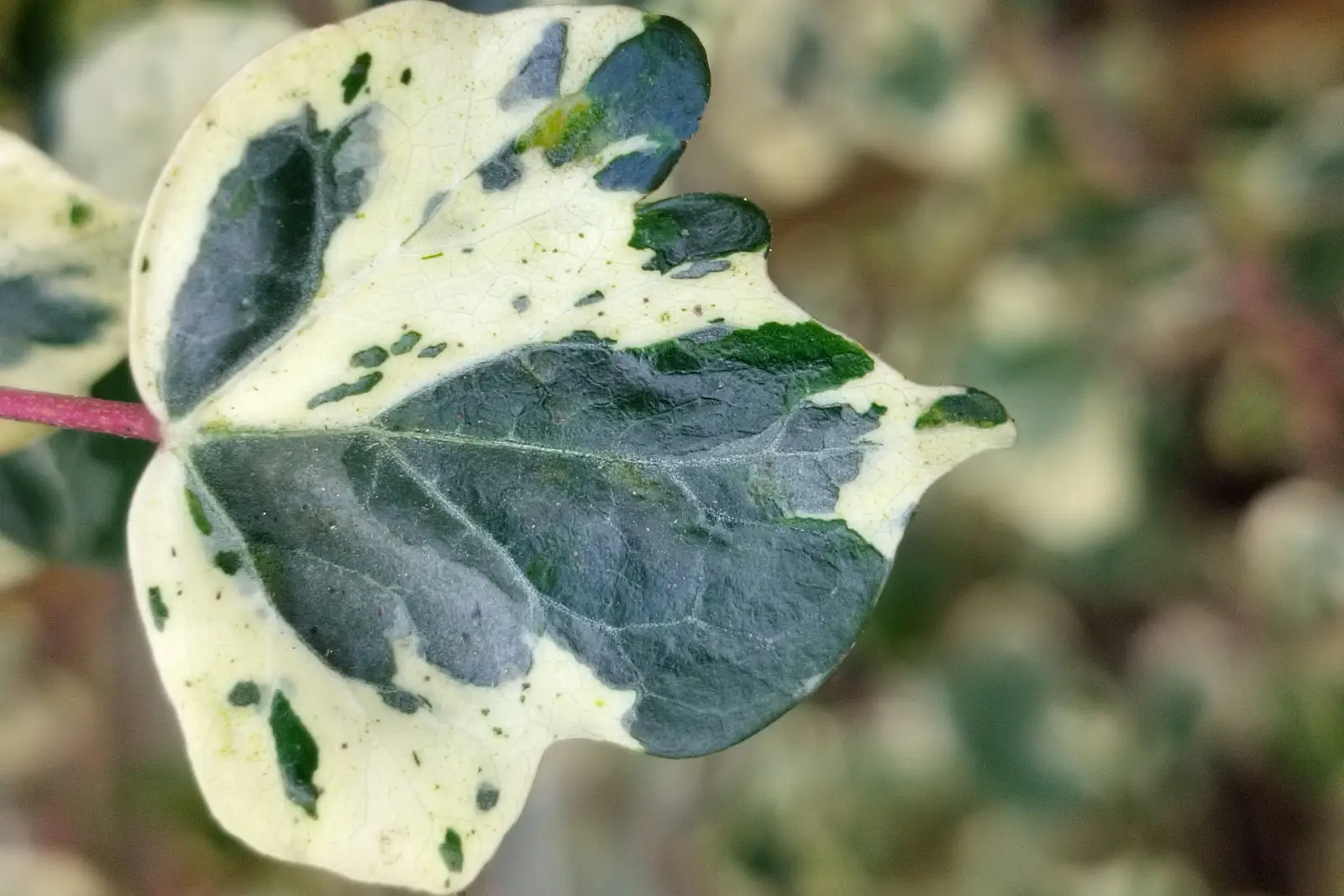
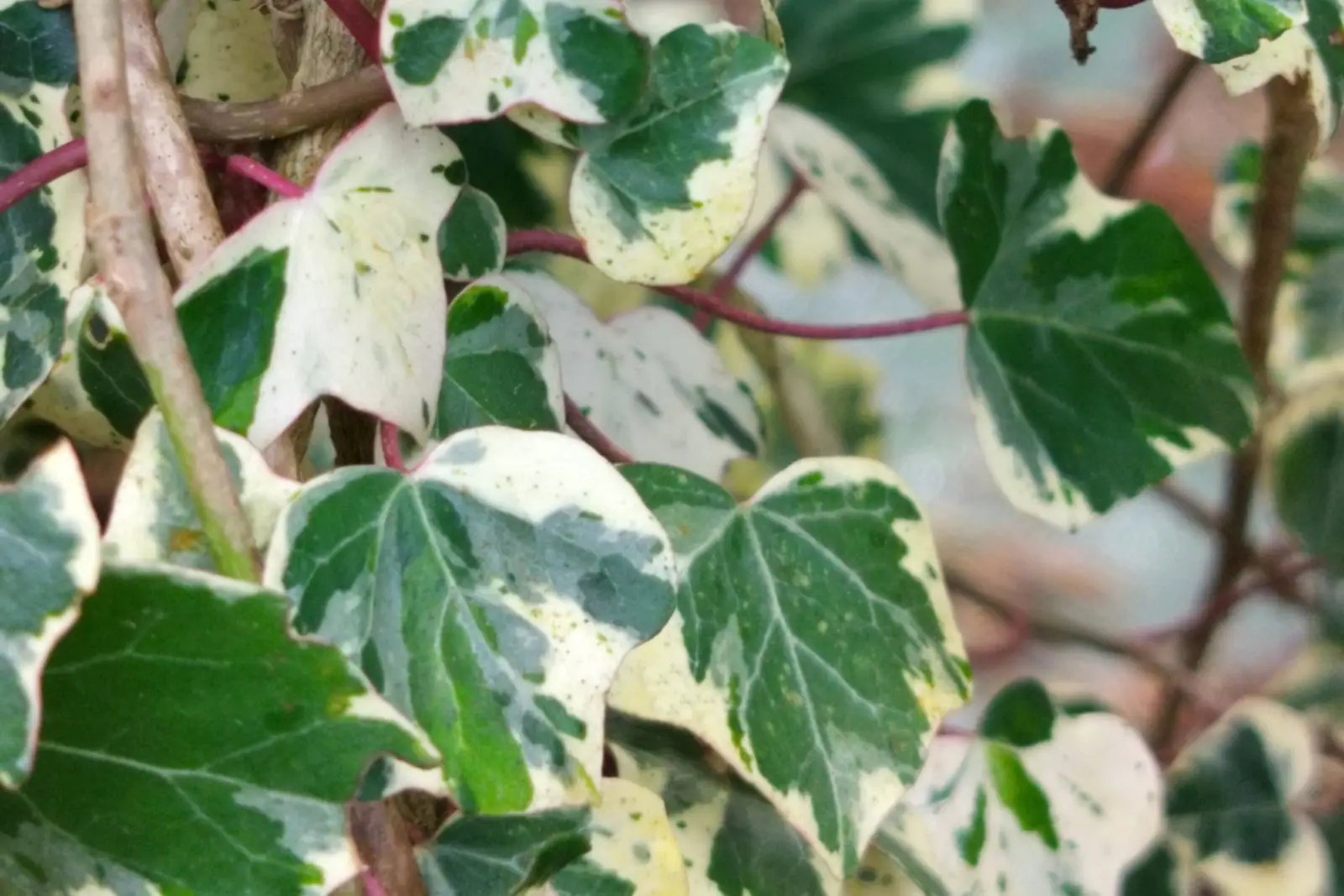
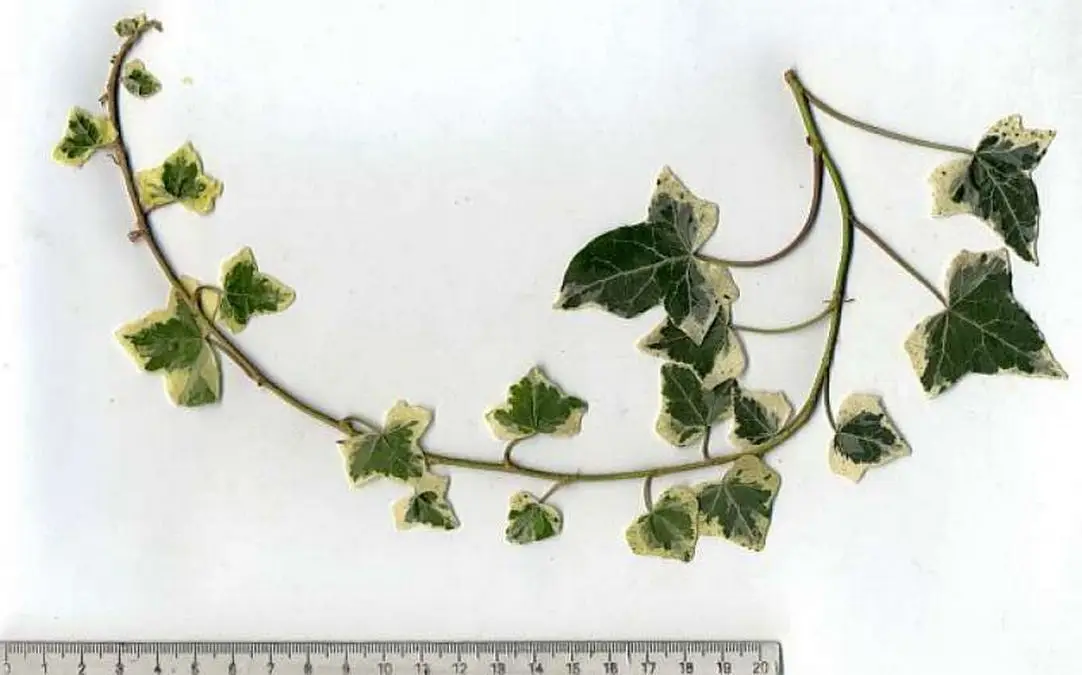
Leaves with 3 lobes, rarely 5. Basic leaf colour dark green and cream to grey-green. The amount of green colour on the leaves varies greatly, some leaves are covered with large spots in combination with green and grey tones, others are half green or almost entirely cream.

Leaves tend to be light yellow in the shade, and in these areas small green dots form; they appear on almost all the leaves of ‘Teneriffe’. They are round or almost round, and rarely measure more than a millimetre in diameter. This is also characteristic of the variety.

In cold weather, the underside of the leaf is sometimes tinged with pink.

This variety was voted «Ivy of the Year» by the American Ivy Society in 2014.

From 5.90 

Clear
Category

Description

Ornamental ivy - Hedera helix ‘Teneriffe’

In a nutshell

Ornamental ivy, Hedera helix ‘Teneriffe’, is a medium-growing, climbing plant with numerous branches.

The leaves are mainly 3-lobed, rarely 5-lobed, and are generally 2 x 3.5 cm in size. A few scattered leaves are slightly larger. The basic colour of the leaves is dark green and cream to grey-green. The amount of green colour on the leaves varies greatly, some leaves are covered with large spots in combination with green and grey tones, others are half green or almost entirely cream.

The leaves tend to be light yellow in the shade, and in these areas, small green spots appear on almost all the leaves of ‘Teneriffe’. They are round or almost round, and rarely measure more than a millimetre in diameter. This is also characteristic of the variety.

 In cold weather, the underside of the leaf can sometimes be tinted pink.

This variety was voted «Ivy of the Year» by the American Ivy Society in 2014.

History

This cultivar was already listed in the Haage & Schmidt nursery catalogue in 1862, under the name ’Microphylla Picta‘. It was described and named »Teneriffe' by Grüber in 1983. It is found naturalised in Spain and on the island of Teneriffe, Azores.

Technical details - Hedera helix 'Teneriffe'

Botanical information

  • Family: Araliaceae
  • Genre : Hedera
  • Species : helix
  • Cultivar: ‘Teneriffe’
  • Pierot classification: ivy type
  • Foliage stage: juvenile
  • Origin of the species: Europe, from Spain to Norway, but little on the Atlantic coast.
  • Origin of cultivar: naturalised in Spain and on the island of Teneriffe


Description of Hedera helix ‘Teneriffe’

  • Growth habit: spreading, sparse
  • Number of lobes: 3 to 5 lobes in general
  • Leaf length: 3.5 cm
  • Sheet width: 2 cm
  • Leaf colour: cream with green spots
  • Colour of veins: cream
  • Colour of stem and petiole: greenish purple or brown
  • Hairs: stellate, 3 to 5 branches


Planting, cultivation and maintenance advice for Hedera helix ‘Teneriffe’

  • Exposure: sun, part shade
  • Hardiness: -15°C
  • Soil moisture: cool soil
  • Soil PH: neutral or chalky
  • Soil type: all
  • Soil richness: ordinary or humus-bearing
  • Use: climber, rockery, topiary, pot, window box, houseplant
  • Development: moderate, slow
  • Pruning: once a year
  • Pests: very rare (spider mites, mealy bugs)
  • Diseases: very rare (leaf spots)
La boutique du lierre - guirlande de lierre

Ivy in literature

“Ivy protects the grave, like a faithful friend who never leaves the memory of the dead.

Chateaubriand, René

Additional information

Weight N/A
Stock of 1-litre cups and pots

6 to 10 pots

Stock 2 or 4 litre containers

6 to 10 containers

Large stock items

0 big topic

General appearance

Compact, Sparse, Spread out

Type of foliage and colour

Atypical, Mixed white

Possible uses

Climber, House plant, Pots or jardinières, Rockery, Hanging, Topiary

Exhibition

Part shade, Sun

Hardiness

Good hardiness

Easy to grow

Average

Speed

Slow

Vigorous development

Medium

Classification according to the Pierot system

Curiosity, Ivy type, variegated

Reward obtained

Ivy of the year

Reviews

There are no reviews yet.

Only logged in customers who have purchased this product may leave a review.

Find out more ...

Other interesting ivy plants for you