English ivy
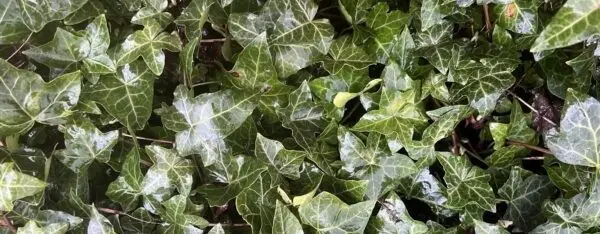
English ivy or Hedera helix (common ivy)
Who hasn't heard of ivy? The most common is common ivy, also known as English ivy (Hedera helix) is a plant whose many benefits many people are unaware of.
A plant that's easy to grow
Ivy is an admirably resilient plant. It is not very demanding in terms of soil type. It can withstand even prolonged drought. In the wild, it takes care of itself. And those who have tried to eradicate it have seen for themselves just how resilient it is. So it's the plant of choice for those who want a low-maintenance garden.
Guaranteed good looks for all 4 seasons
With its permanent foliage, English ivy puts on a show all year round. There are many cultivars of Hedera helix which you can discover on this site. The shape of the leaves can sometimes be surprising: curly, wavy, cut out, etc. You can also play with colour, with leaves in shades of cream, yellow or white. What's more, many ivies change colour with the seasons, turning red in winter, for example, or shades of pink in spring.
Multiple uses
The environment of choice for Hedera helix is shade or part-shade. It does particularly well under trees, including among the roots, where it is often difficult to grow anything. But some varieties of ivy are perfectly suited to sunny areas. The most common use for ivy is as ground cover. It can form a thick blanket that protects the soil well and prevents unwanted growth. But, as you know, ivy is also an outstanding climber. It can cover an entire facade without the need for supports.
In addition to these two most common uses for ivy, it can also be put to more specific uses. It is often used as a houseplant, where the relative lack of light is not a problem, nor are the somewhat dry conditions of the ambient air. Some will use it to cover an arch or a pergola. Others will even use it to make topiaries, rather like boxwood, but without the diseases and moths. In short, ivy really does lend itself to a whole host of uses, just waiting to be put to use by your imagination.
A recognised ecological interest
This is undoubtedly one of the most important aspects of English ivy's many qualities.
- English ivy is an excellent insulator, protecting against excess heat in summer and frost in winter. It can save up to 3 degrees in either direction.
- Ivy is home to a wide variety of microfauna, providing a comfortable, permanent habitat.
- Ivy, with its delayed flowering, usually around November, provides valuable food for foraging insects at a time when they can't find much else to forage on.
- The fruit of the ivy plant feeds the birds at the end of winter when they are running out of food.
Unfounded criticism of Hedera helix
OK, you may say, but ivy has its faults too:
- it is invasive
- it damages walls
- a parasite that suffocates trees
These often-heard criticisms are largely unfounded.
English ivy can be controlled by pruning.
Of course, as we've said, ivy is hardy, and over time it can grow well beyond your expectations. But then, the easiest thing to do is prune it. Ivy stands up well to pruning. Against a wall, for example, it can be trimmed both in height to prevent it climbing onto the roof and in thickness if it starts to grow away from the wall. On the ground, simply prune around the edges to bring it back into the space you have allocated for it. Annual pruning is generally sufficient. But you can also let it roam if you have enough space. That's the beauty of ivy. You should also know that there are more compact varieties that will never be invasive.
Ivy protects.
Ivy does not damage healthy walls and it protects old walls. What does damage the wall is trying to pull it out. So, as we said earlier, all you have to do is trim it back and your walls will be well protected.
Ivy is not a pest.
The most unfounded criticism, but also the most persistent, is that of parasitism. As any botanist will tell you: ivy is not a pest. It does not feed on or to the detriment of the plant on which it settles. On the contrary, it provides organic matter with its dry, decomposing leaves. If the tree is healthy, ivy will climb the trunk but stop at a certain height without covering the crown. On the other hand, it can completely cover a dead tree, giving it a new lease of life.
This plea for ivy (Hedera helixYes, no doubt, as with all the things we like. The fact remains, however, that too many unfair accusations are levelled at ivy without foundation, and that ivy has enormous environmental, aesthetic and ecological qualities that make it a real plant of the future.


 Français
  English (UK)
  Deutsch
  Nederlands
  Italiano