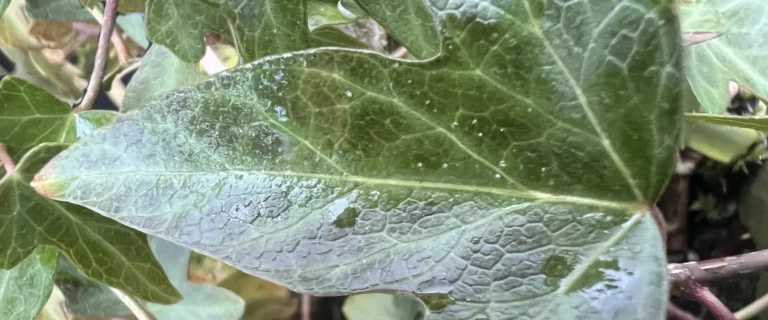
A wide range of ivy cultivars
Ivy needs to be classified because it has the marvellous ability to undergo what are known as «mutations». In other words, it can produce new shapes or colours. Often it's a simple stem that's not like the others. All you have to do is take cuttings from it and propagate it. Sometimes it's a new shape discovered in nature. In this way, new varieties of ivy are born spontaneously, which we can select and propagate.
The result is a huge number of cultivars. Probably between 1,000 and 2,000. The number is difficult to establish, as not all the cultivars offered by nurseries around the world are necessarily referenced. There are also many cultivars with different names, but which are in fact the same. The Royal Horticultural Society's Hedera The Complete Guide by Hugh McAllister and Rosalyn Marshall (now out of print) lists over 2,000 cultivars, including synonyms.
A classification of ivy: the Pierot system
To find your way among all these varieties of ivy, there is a classification system for ivy, created by Suzanne Warner Pierot, who was the founder and first president of the American Ivy Association (American Ivy Society). This system is based mainly on the shape of the leaves. It has the advantage of being simple and easy to read. However, as nature is often more complicated than our simplistic human classifications, the same cultivar may be classified in several categories.
The Pierot system comprises 9 categories:
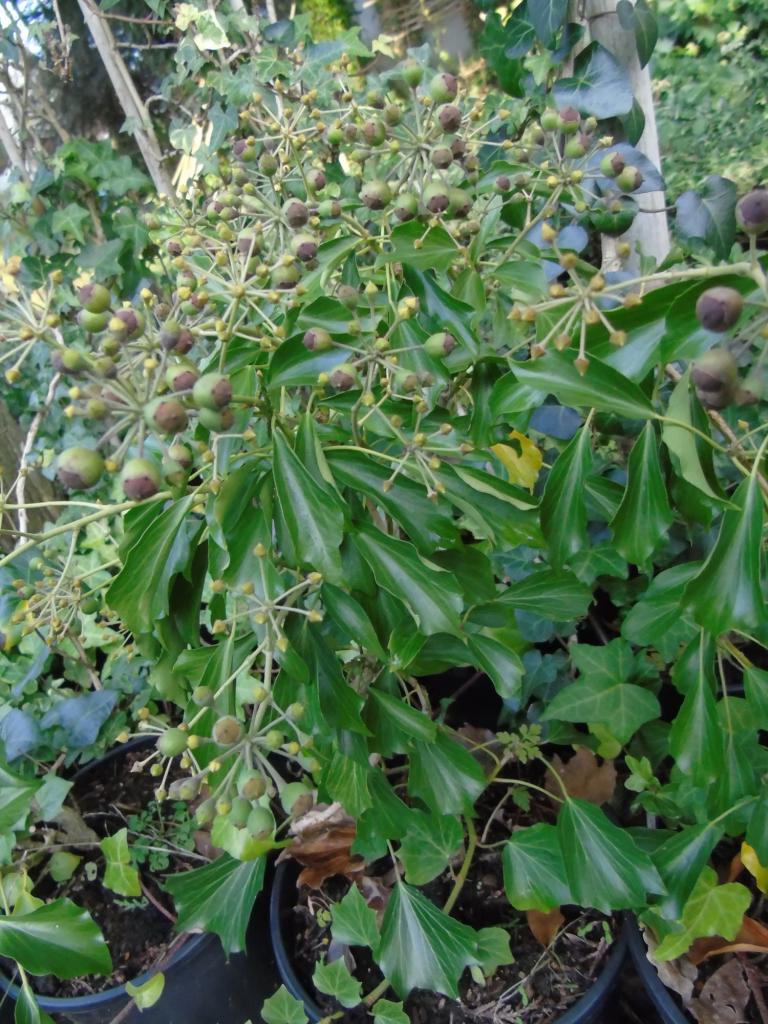
- Adult ivies – Adult ivy All ivy plants that have progressed from their juvenile climbing stage to the ultimate shrub stage, producing flowers and fruit.
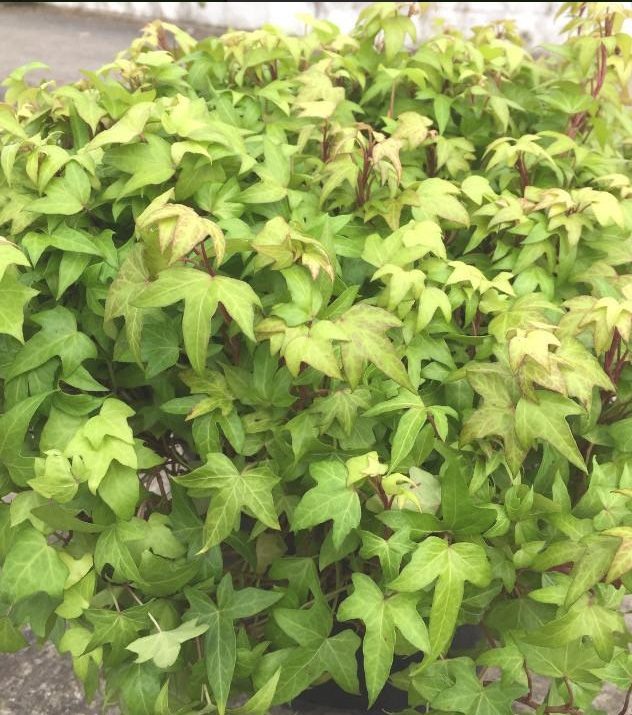
- Bird's foot ivies – Bird's-foot ivy These are ivy plants whose leaves are made up of very narrow, deep lobes, like bird's feet.
- Curly ivies – Curly ivy The leaves are not flat, but wavy, curled, folded or hemmed.
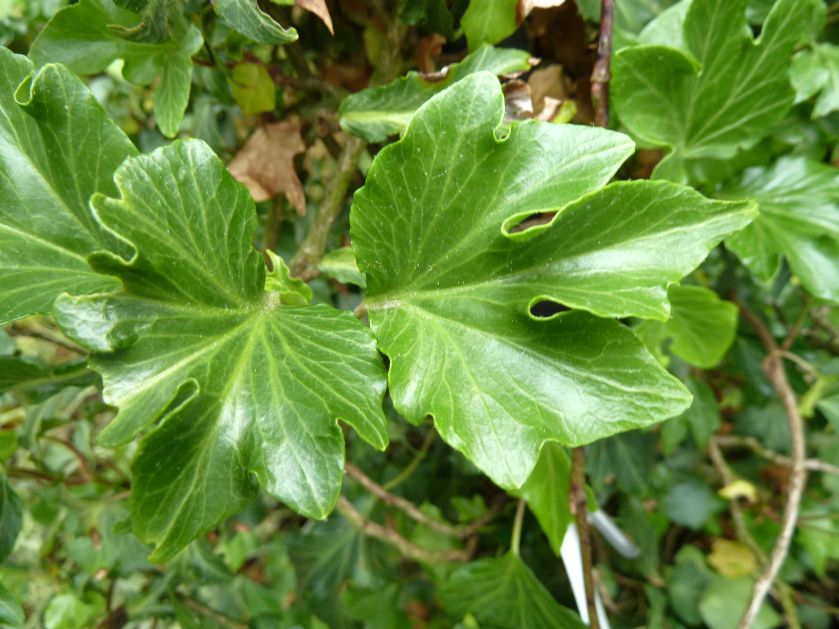
- Fan ivies – Fan ivy ivy with broad, fan-shaped leaves.
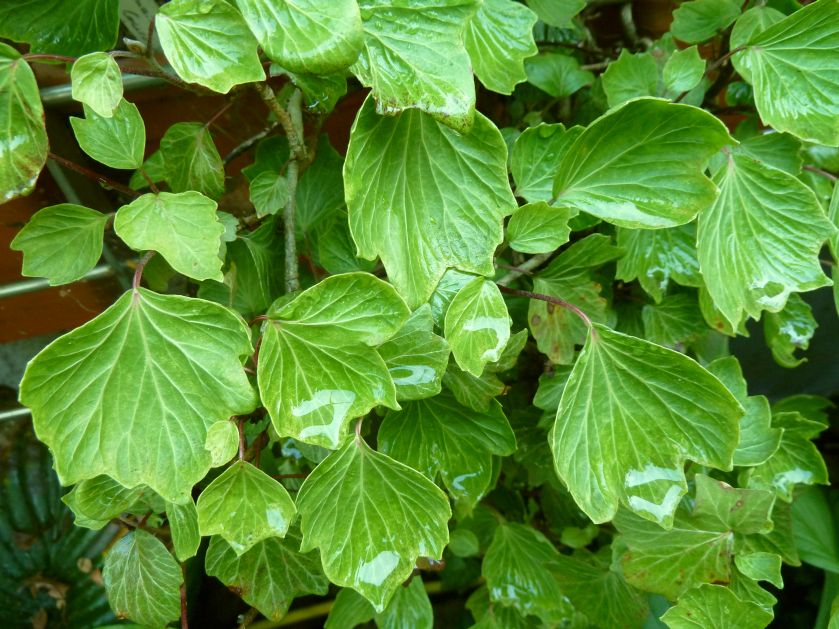
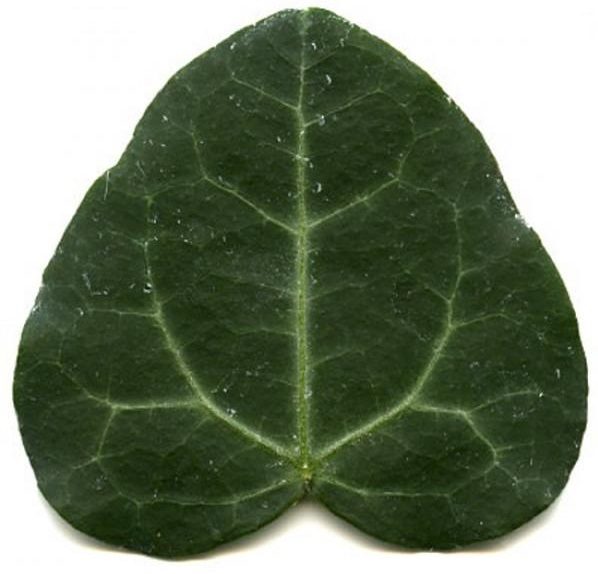
- Heart-shaped ivies – Heart-shaped ivy Ivy with a heart-shaped leaf base.
- Ivy-ivies – Ivy type Common ivy: concerns all ivy that has kept the typical shape of common ivy, flat leaves with 3 to 7 lobes.
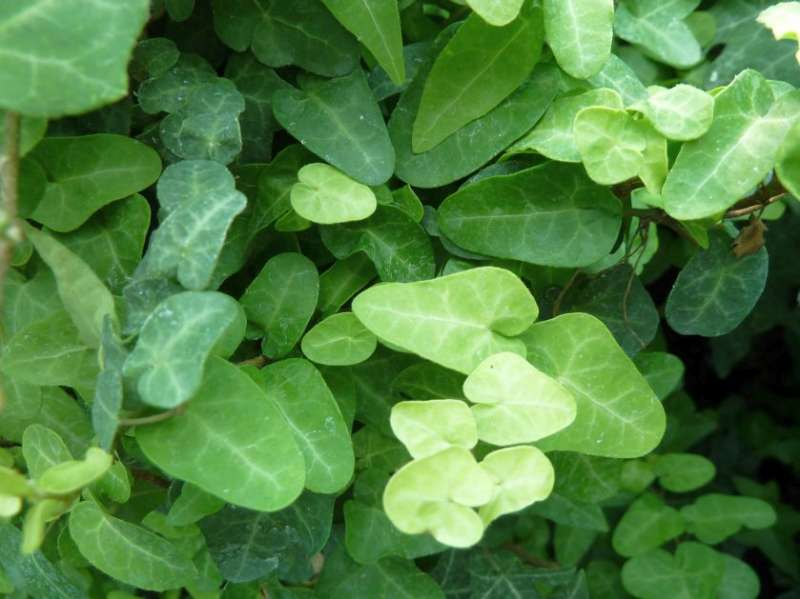
- Miniature-ivies – Miniature ivy Small-leaved ivy, usually less than 2.5 cm long.
- Oddities – Curiosities A type of ivy whose leaves take on original, unusual shapes.
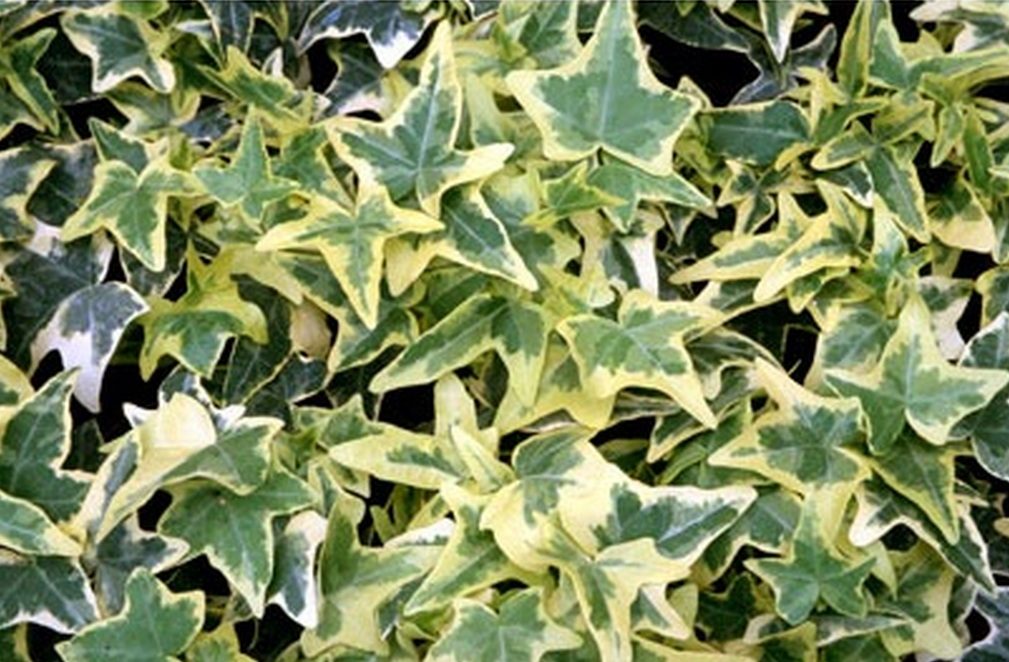
- Variegates ivies – Mixed ivy Ivy with multi-coloured leaves.
As you can see, this ivy classification system is very accessible, even for the uninitiated. That's what has made it so successful. Created in the early 1970s, it is still very much in use today.
But as you can guess, ivy can be variegated and curly, or miniature and bird's-foot. In these cases, the major classification should be indicated and the secondary classification(s) added.
Pittsburgh ivy'
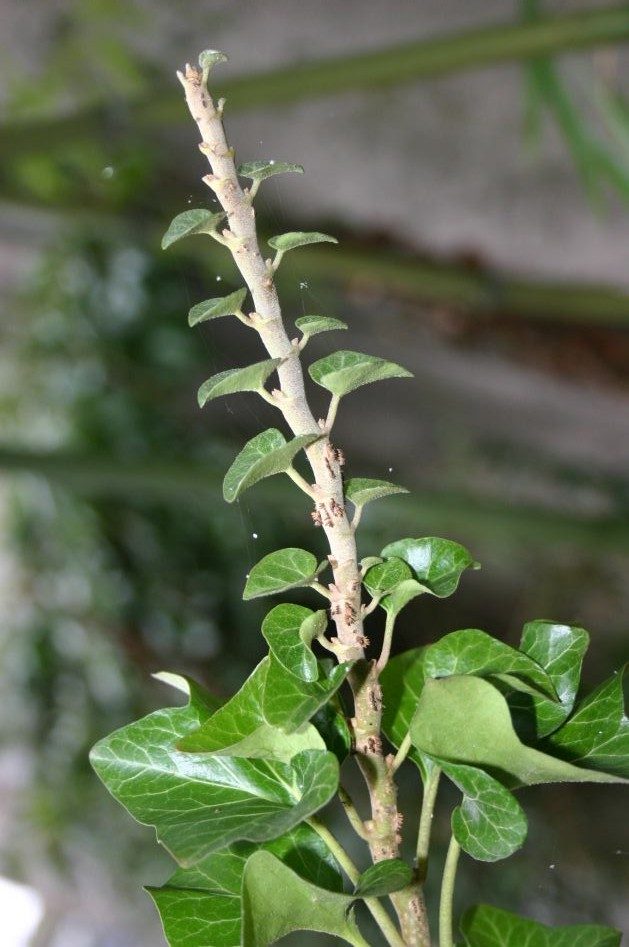
Among all the mutations that ivy has offered us, there is one that has been particularly successful. It is a mutation selected by Paul Randolph in Pennsylvania. It is unique in that it is very branchy, generating stems emerging from each leaf axil, unlike many other ivies which form long stems with very few branches. This particular ivy was given the name ‘Pittsburgh‘.
Another very interesting feature of this cultivar is that it has a strong tendency to mutate, forming what botanists call «sports» (i.e. mutations). This has resulted in a host of new cultivars derived from ‘Pittsburgh’, to the point where it can be considered a tenth category in the classification of ivies. These are ivies that usually have a bushy, dense habit.