Everything about this variety is askew!

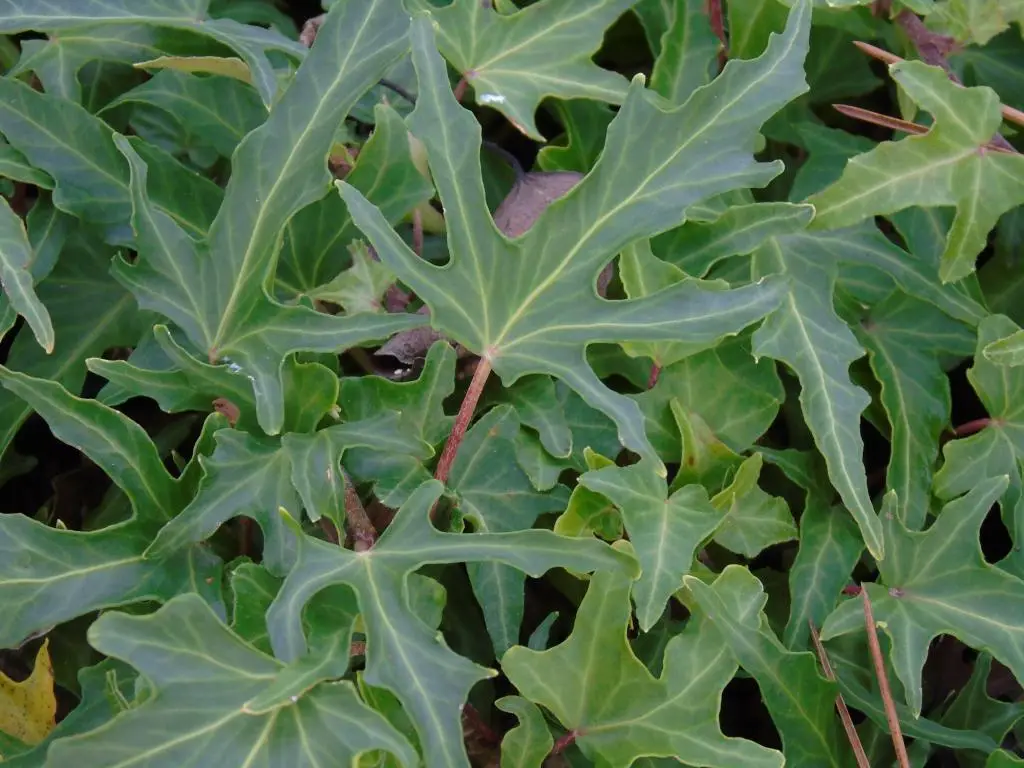
The leaves are all different, with the edge of the blade undulating and curving upwards in a cup shape. Short, twisted branches with widely spaced internodes.

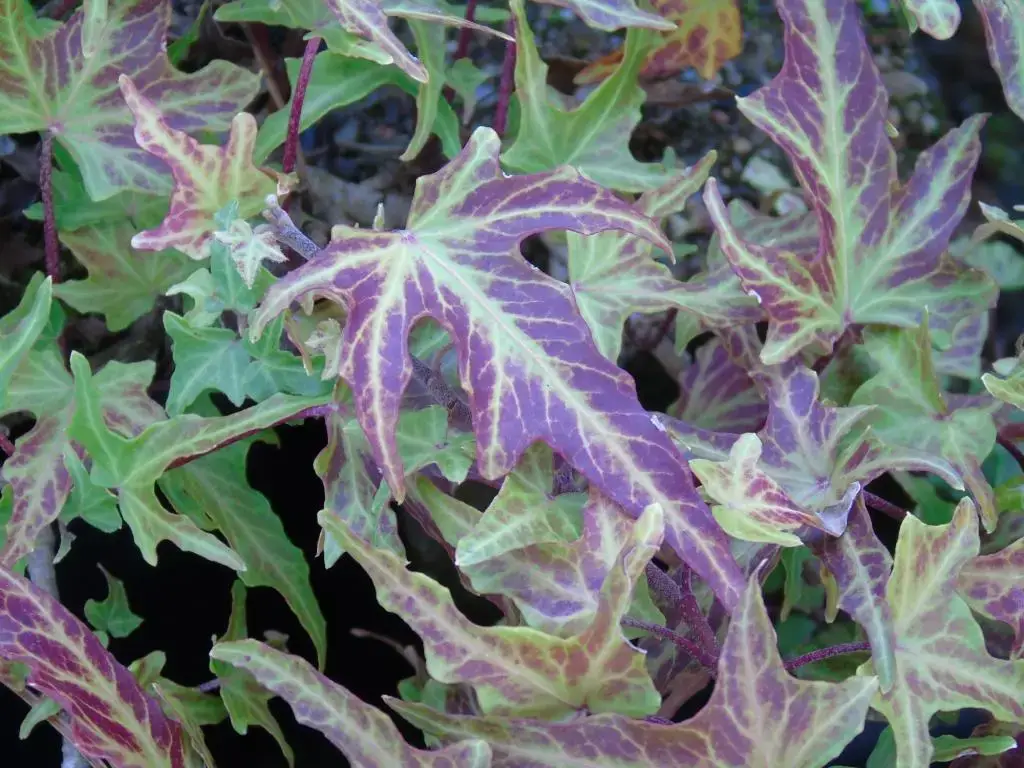
Forms beautiful, sparse carpets. Red veins in winter.

From 5.90 

Clear
Category

Description

Ornamental ivy - Hedera helix ‘Miss Maroc’

In a nutshell

Everything about this variety is askew!
Ornamental ivy, Hedera helix ‘Miss Morocco’, The leaves are all different. The lobes are asymmetrical. The edge of the leaf blade is wavy and curved upwards in a cup shape.

The branches are short and twisted, with widely spaced internodes.

This ivy forms beautiful, sparse carpets. The foliage takes on red veins in winter.

History

This cultivar is derived from a mutation of ‘Star’ found in the Schleswig-Holstein ivy collection in Germany in 1988. The same ivy was also discovered growing near a hotel in Morocco in 1973.

Technical details - Hedera helix 'Miss Maroc'

Botanical information

  • Family: Araliaceae
  • Genre : Hedera
  • Species : helix
  • Cultivar : ‘Miss Morocco’
  • Pierot classification: bird's-foot ivy, wavy-crisped leaves
  • Foliage stage: juvenile
  • Origin of the species: Europe, from Spain to Norway, but little on the Atlantic coast.
  • Origin of cultivar: found in a hotel garden in Morocco


Description of Hedera helix ‘Miss Maroc’

  • Growth habit: stocky-spreading
  • Number of lobes: usually 5 lobes, asymmetrical
  • Leaf length: 4 cm
  • Sheet width: 4 cm
  • Colour of leaf: medium green
  • Colour of veins: light green
  • Stems: medium-sized, well-branched
  • Colour of stem and petiole: purple green
  • Hairs: stellate, 3 to 5 branches


Planting, cultivation and maintenance advice for Hedera helix ‘Miss Maroc’

  • Exposure: shade, part shade, sun
  • Hardiness: -15°C
  • Soil moisture: cool soil
  • Soil PH: neutral or chalky
  • Soil type: all
  • Soil richness: ordinary or humus-bearing
  • Use: ground cover, climber, hanging baskets, pots, window boxes, houseplant
  • Development: moderate
  • Pruning: once a year
  • Pests: very rare (spider mites, mealy bugs)
  • Diseases: very rare (leaf spots)

A page from my little ivy encyclopaedia

A new look at ivy ...

Are all ivies the same?

Incorrect!

Of course, all ivy plants are ivy plants, so they're related! But they can differ in many ways:

  •  the size of the leaves: some are tiny, others very large
  • the shape of the leaves: sometimes very indented, sometimes almost round
  • the size of the leaves, from tiny to very large
  • the colour of the leaves: from light to dark green, from yellow to bluish grey or red, from variegated yellow to variegated white, etc.
  • the number of lobes from 0 to 7 or more
  • growth habit: climbing, spreading, compact, stocky, upright, shrubby
  • the speed or slowness of development
  • vigour: small bonsai ivy or huge creeper

With a little observation, you'll be able to spot the thousand details that make all the difference!

La boutique du lierre - Ivy garland

Ivy in literature

“In abandoned gardens, ivy rises like a silent prayer to heaven.

Victor Hugo, Les Contemplations

Additional information

Weight N/A
Stock of 1-litre cups and pots

21 to 50 pots

Stock 2 or 4 litre containers

21 to 50 containers

Large stock items

0 big topic

General appearance

Fairly branched, Stocky

Type of foliage and colour

Atypical, Curly or wavy, Red in winter, Green

Possible uses

Ground cover, Climber, Pots or planters, Hanging lamp

Exhibition

Part shade, Shade, Sun

Hardiness

Good hardiness

Easy to grow

Easy

Speed

Average

Vigorous development

Medium

Classification according to the Pierot system

From 'Pittsburgh', Wavy, curly or crisp, Bird's foot

Reward obtained

No known reward

Reviews

There are no reviews yet.

Only logged in customers who have purchased this product may leave a review.

Find out more ...

Other interesting ivy plants for you